By Ted Strange, Special Collections Exhibitions Volunteer
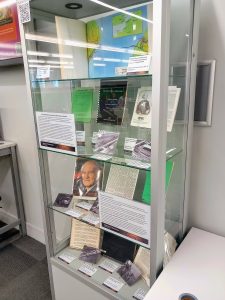
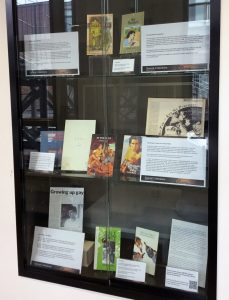
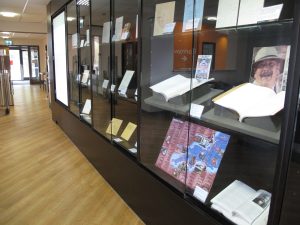
The display case on Level -1 of the Forum Library
Designed to celebrate the life and work of the great Cornish poet, Jack Clemo, this exhibition spans a portion of literary, visual, and personal materials from the Special Collection’s significant Clemo collection. The exhibition is structured to highlight Clemo’s personality and friendships, his literary work, and his marriage. The intention is thus to offer a glimpse into the more extensive offerings of Jack Clemo’s archive, including unpublished literature, personal correspondence, and physical possessions.
I approached this exhibition as a historian with a lived experience of sensory impairment. Admittedly, my interest in disability history was the initial catalyst for approaching the Clemo archive. However, it would be a mistake to over-emphasise the personal life of Clemo, without recognising the primary importance of his remarkable literary career; in fact, his most notable works were published prior to the onset of his blindness. Clemo possessed an incredible natural gift for describing both natural and industrial landscape: his ‘party trick’ was for friends to describe a place to which they had travelled and he would write a short recollection of their experience, including descriptions of things that even they had forgotten they observed. Clemo used these vivid descriptions of his local Cornish clay pits as the background for his fiercely individualist Calvinist poetry. Many enthusiasts will recall the story in ‘Confessions of a Rebel’ in which an adolescent Clemo is being praised by his headmaster to his mother as a ‘born philosopher’. As such, this archive is of particular interest to those interested in both religious and twentieth century West Country literature.
Female influences loomed large in Clemo’s life and archive. Clemo’s mother, Eveline, raised him alone following the death of his father during the First World War, supporting him throughout his illnesses. Later, he married Ruth Clemo, with whom he shared his happy final years and many Valentine’s cards that can be found in the archive. Marriage was imperative towards Clemo’s vision for God’s plan for his life. It was Clemo’s belief that his marriage had been prescribed as a divine destiny; once he had achieved this goal, his senses would be restored. This did not come to pass, and whilst he sporadically regained some hearing, he spent his adult life being ably supported by Eveline and Ruth (pictured in the top of the exhibition, communicating with Clemo by tracing letters onto his hand).
Some of the most evocative materials in this archive are, naturally, the physical possessions. The conkers from Vallombrosa Woods, shown in the bottom shelf of the exhibition, were stored in a heart-shaped box as a gift to Clemo’s wife. These accompany the numerous love letters between the couple throughout the years of their marriage. The physical possessions in the archive are not limited to Clemo’s romantic relationship; the archive also contains items such as dog fur, which encourages us to consider the value and purpose of retaining such items. Perhaps, in addition to sentimentality, they were stored for their sensory value as someone deprived of major senses.
“It’s odd in a way that you, who are in close and vigorous touch with the everyday world, should rely largely on fancy and imagination for your poetry, while I, who seem cut off from the world, hack out most of my poems with a blunt down-to-earth realism in which there is hardly a trace of fancy – no angels or dragons or daughters of Neptune.” – Letter from Jack Clemo to Charles Causley (9th April 1970)
The wedding party of Jack and Ruth Clemo, Charles Causley is pictured on the far left [EUL MS 68/PERS/3/1/8]
The archive contains a substantial amount of material that will be of interest to enthusiasts of popular poet Charles Causley, a close friend and advocate for Clemo, who would later serve as his best man. In letters from both the archives of Jack Clemo and Charles Causley – some of which have been included in this exhibition – we can see the extensive efforts that Causley goes to, ensuring Clemo’s voice was heard in an environment which often reduced him to a ‘novelty-act’. Causley and Clemo found common ground in their mutual admiration for literature, Cornish upbringing, and close maternal relationships. Whilst Causley’s life took a very different trajectory, fighting in the Second World War and becoming a school teacher, their roots bound them to one another, and they exchanged letters until Clemo’s death in 1994.
Clemo’s story is one of talent and individualism, rather than affliction. His personal experiences must be considered in the context of exploring his archive and exhibiting his life, but they must not be considered the primary reason for his enduring importance. Clemo wrote fiercely about spirituality within the brutal setting of the clay pits, imbuing mysticism with blunt Cornish realism to create a “clear, fiery vision”. Clemo frequently highlighted in his later life, during a resurgence in his popularity, that his story is of love – in marriage and in faith – rather than pity. As he once said to his friend, the painter Lionel Miskin: “When the gospel invades, tragedy goes out”.
With special thanks to Dr Sarah-Jayne Ainsworth and the Special Collections teamfor passionately supervising this project, and to Michael Spinks for valuable insights into Clemo’s theology as well as fun facts such as Clemo’s ‘party-trick’.
The nineteenth century’s ‘Great Game’ saw diplomatic intrigue, proxy battles and occasional military stand-offs between Britain and Russia as both empires vied for control in central Asia. There were, however, instances of co-operation in the interests of peace, such as the Afghan Boundary Commission which travelled around the northern areas of Afghanistan between 1885 and 1888 in an attempt to agree on the location of the northern border with Russian Turkestan. Matters deteriorated again afterwards, however, leading to an incident in which Colonel (later Sir) Francis Younghusband was detained by Colonel Yonoff in the summer of 1891, and a large number of Afghans were massacred by the Russians nearby the following year. A series of negotiations between the Russians and the British in 1893 and 1894 led to an agreement in March 1895 that a joint Commission would be established once for all to settle the precise boundary between the two empires.
Map of part of the region surveyed by the earlier Afghan Boundary Commission of 1885-1888 from Major A.C. Yate’s England and Russia Face to Face in Asia: Travels with the Afghan Boundary Commission (London: William Blackwood and Sons, 1887) Special Collections Reserve 958.103 YAT
British members of the Commission left India on 20 June 1895 and began a month’s trek up into the Pamir Mountains. The group was led by Major-General M. G. Gerard and consisted of Colonel T.H. Holdich and Major R.A. Wahab of the Royal Engineers, Captain E. F. H. McSwiney (Intelligence), surgeon and naturalist Captain A.W. Alcock of the Indian Medical Service, Ressaidar Zahirulla Khan of the Central India Horse, topographer Khan Sahib Abdul Qhaffir, with two Native Surveyors, as well as sepoys of the 20th Punjab Infantry, local porters and assistants, plus a large number of Kashmir ponies to carry all the food and equipment.
On 22 July they met with their Russian counterparts on the banks of the lake at the ‘Little Pamir’, a broad valley in the eastern part of the Wakhan corridor in NE Afghanistan. . The Russian delegation were headed by General Povalo-Shveikovski, Governor of Ferghana, and comprised a similar mixture of scientific officers, engineers and academics, accompanied by a guard of mounted Cossacks. In a spirit of fraternal exchange, it was agreed that the lake would from henceforth be known as ‘Lake Victoria’ and the mountains separating the Little Pamir from the Great Pamir would be known as the ‘Nicholas Range’ on the respective maps of each country. The name by which the locals knew these features was not, naturally, considered of great importance.
The Afghan representatives arrived a few days later, the senior delegate being Sardar Ghulam Mohiuddin Khan, the Governor of Faizabad (the capital of Badakshan), assisted by Mufti Ashur Muhammad Khan. Over the next two months the Afghans, Russians and British would travel along the ninety miles of the border region, demarcating the boundary line and signing a series of protocols to confirm their joint agreement on the matter. All this was finally concluded on 14 September, after which the groups parted and began their return journeys.
Full details of the expedition can be found in the official Report on the proceedings of the Pamir Boundary Commission (Calcutta: Office of the Superintendent of Government Printing, India, 1897) which covers 100 pages and includes a narrative of the journey, scientific reports on flora, fauna and geology, as well as individual sections on particular topics of interest, all illustrated with 39 pages of photographs. These were probably taken by Asmatulla Khan, one of the two surveyors assisting Khan Sahib Abdul Qhaffir, and who is described as ‘an excellent draftsman’ who had ‘undergone a short training at Rurki Survey in photography’ (p.46.)
Although we do not have a copy of the Report here in our library, we do have an interesting photo album which contains the same photographs that appear in the Report, albeit in a different order. Unlike the official publication, these photographs are accompanied by captions written in pencil, under which a second hand has written out the captions more clearly, sometimes with small variations. These have clearly been done by someone with knowledge of the region, for there are occasional clarifications or additions of place names.
Who added these annotations? There is a clue in the front of the book, as the University College bookplate (which itself indicates that the album was donated before 1955) has an inscription ‘Given by Miss Hodges, Lustleigh.’ This is almost certainly Miss Angela Barbara Edwards Hodges, who born in Teignmouth in 1892 and is recorded as living at Underwood, Lustleigh, during the 1930s and 1940s. Her father was Henry Francis Edwards Hodges (1860-1900), a Captain in the 1st battalion Royal Irish Rifles. According to Shadbolt’s The Afghan Campaigns of 1878-1880 (London, 1882. p.206)Hodges served in Afghanistan with the 2nd Battalion 15th (Yorkshire East Riding) Regiment during the Afghan wars, taking part in the advance to Kandahar as a probationary staff officer, under the command of Lt.-Colonel R. L. Dashwood. Although he did not accompany the Pamir Commission, he may have had an indirect connection to their work, or at least took sufficient interest in it to acquire a copy of this album.
The photographs have an interests that stretches far beyond imperial history, however, as they include views of local Buddhist monuments and sacred architecture, just as the Henzal stupa and the domed tomb of Bozai Gumbaz.
The album has now been digitised for the Digital Archive of the Middle East (DAME) and can be viewed here as a PDF. The individual photographs can also be viewed here. There are also a growing number of other materials relating to Afghanistan on the DAME website.
Choosing menstruation as an exhibition topic really brought into focus the challenges of researching a subject not traditionally catalogued within archive and rare book collections. The taboo and private nature of menstruation meant that archive items relating to it were much more hidden than for other exhibitions the team has completed recently.
The exhibition, on level +1 of the university’s Forum Library
As with many other exhibitions, research started with a library catalogue search for rare books. Thinking of keywords proved to need a creative approach, as terms straddled colloquial and medical (periods, the curse, flow, blood, PMT, PMS, the rag…) and often had changed, even over short periods of time.
Items from the Hypatia collection were the first to be identified as they came up on a keyword search, such as the book of cartoons ‘Heavy Periods’ by Fanny Tribble (1983), the pamphlet ‘Menstrual Taboos’ (1977) and the book ‘The Curse’ by Janice Delaney (1976).
Several of the books chosen to be in the final exhibition however, such as the texts focusing on the period around menarche, ‘What a Mother Should Tell her Little Girl’ by Isabelle Thompson Smart (1911) were found by subsequently scanning the shelves, having not been identified through the catalogue. The language used in this book demonstrates the often cryptic nature in which menstruation is discussed, especially in the period that it dates from. For example, although an instructional text in its nature, no mention of menstrual flow is made, only that ‘you will understand what mother means when she says she has a headache or backache’ and that girls ‘cry upon the slightest provocation’.
The poems featured, ‘The Change’ by Sylvia Kantaris and ‘Menustration at Forty’ by Anne Sexton, were discovered by an even closer examination of texts in the Hypatia collection, through identifying poetry anthologies likely to contain relevant material. In terms of archive material, results were very limited for a keyword search. Many objects were tantalising, but turned out not to relate to menstruation at all, or could not be proved to be. Others had only recently been catalogued as being related to menstruation, such as Dorothy Harmsworth’s diary. Used whilst she was attempting to conceive a child, the diary records period flow and whether it was heavy or light on certain days.
A notable exception to this was the Daphne du Maurier archive. Du Maurier and her family often used code words within their conversation and writing, and in her letters menstruation is referred to as ‘Robert’. The postcard chosen for the exhibition is from a trip to the Matterhorn, where du Maurier was accompanied by ‘Robert’. She also refers to anaemia and fatigue.
Personal knowledge of certain collections was needed to identify several items which were subsequently included in the exhibition, such as the 17th century books from the Syon Abbey collection A choice manuall : or, Rare and select secrets in physick and chyrurgery, collected and practised by the … Countesse of Kent, dated 1654 and Zōologia, Schröder, Johann, dated 1659 which both contain recipes for ailments relating to menstruation, referred to as ‘the flowers’, with ingredients including hare’s foot!
Pages from ‘A choice manuall: or, Rare and select secrets in physick and chyrurgery…’ by the Countesse of Kent – Syon Abbey 1654/KEN (1654). Here menstruation is referred to as ‘sickness.’
Period products are central in the lived experience of menstruation, so we were very keen to identify any items relating to these. Again, knowledge from an archivist was needed to identify a particular article in the University’s student publication RAZZ magazine. We were very happy to find illustrations in the article, as even in the Hypatia collection, nothing like this had been identified. It was interesting to see how the flower motif was used in the illustrations, linking to the wording used in the older books from the Syon Abbey and Rare Books collections.
Flowers were also featured in the piece of artwork ‘The Physical, Mental and Social Impact of Menstrual Taboos on Women’s Health’ (2025). It was brilliant to have this piece by medical student Sarah Packer in the exhibition as it was inspired by items relating to women’s health within the collections, especially the pamphlet ‘Menstrual Taboos’.
Overall planning this exhibition it has been a thought provoking experience both in the way material was discovered, and the themes that run through it, often over centuries. We hope that our journey has shed light on the process of researching a topic conventionally concealed within archives and rare book catalogues.
Exhibition Items: Syon Abbey 1654/KEN – Extract from ‘A choice manuall: or, Rare and select secrets in physick and chyrurgery…’ by the Countesse of Kent (1654) Rare Books B 1659/SCH – Extract from ‘Zoologia: or the history of animals as they are useful in physick and chirurgery’ by Johann Schröder (1659) Hypatia CRIT/BER – Poem from ‘About women: an anthology…’ by Stephen Berg (1973) Hypatia CRIT/DEL – ‘The Curse: a cultural history of menstruation’ by Janice Delaney (1976) Hypatia HEA/SMA – ‘What a mother should tell her little girl …’ by Isabelle Thompson Smart (1911) EUL MS 435/6/5/1/6 – Pocket Diary for 1945 EUL MS 207/6/4/1/106 – Manuscript postcard from Daphne du Maurier to ’Tod’ (23 May 1952) EUL MS 367/LIT/2/4/1/2 – Typescript draft of the poem ‘The Change’ (c 1985) Hypatia HUM/TRI/Pamphlet – ‘Heavy Periods’ by Fanny Tribble (1983) University Archive: EUL UA/A/25 – ‘Razz Magazine’ (Issue 28, 2019) Hypatia HEA/MEN/Pamphlet – ‘Menstrual Taboos’ by Pauline Long (1977) ‘The Physical, Mental and Social Impact of Menstrual Taboos on Women’s Health’ by Sarah Packer (2025)
Although Exeter is not renowned for its African collections, there is some valuable material here. Our Middle East archives and AWDU collections include extensive material from Egypt and Sudan, with a range of items from other North African countries including Libya, Algeria, Morocco and Tunisia. As a member of SCOLMA, the UK Libraries and Archives Group on Africa, Exeter also specialises in material on Ghana, and the ‘Ghana Collection’ housed in the Old Library, has thousands of books, official documents, microfilms and pamphlets. However, we also have a unique and fascinating archive in Special Collections that documents the work of Jean Trevor with Hausa girls and young women in northern Nigeria.
Jean Trevor (1931-75)
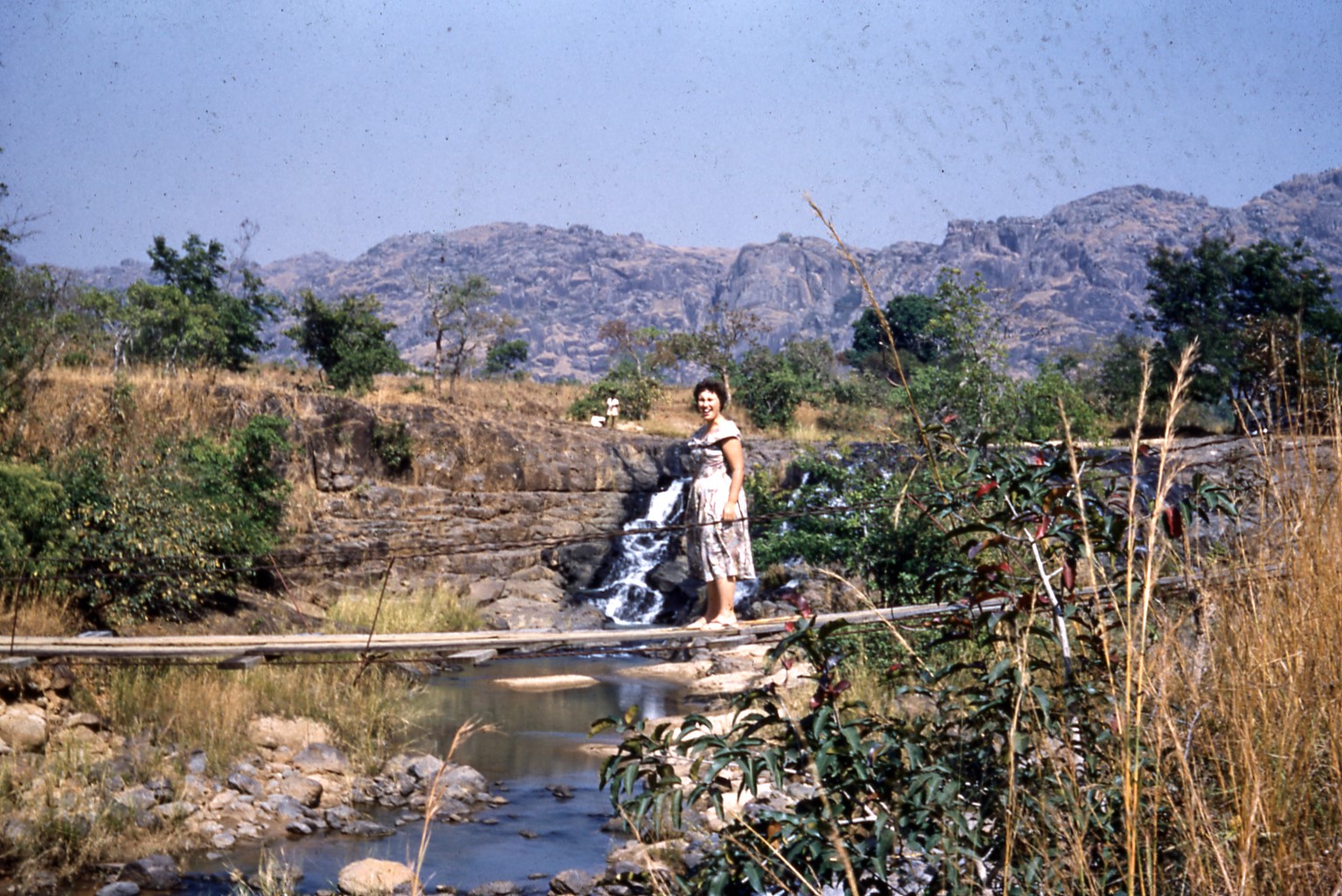
Jean Trevor in the Nigeria plateau region
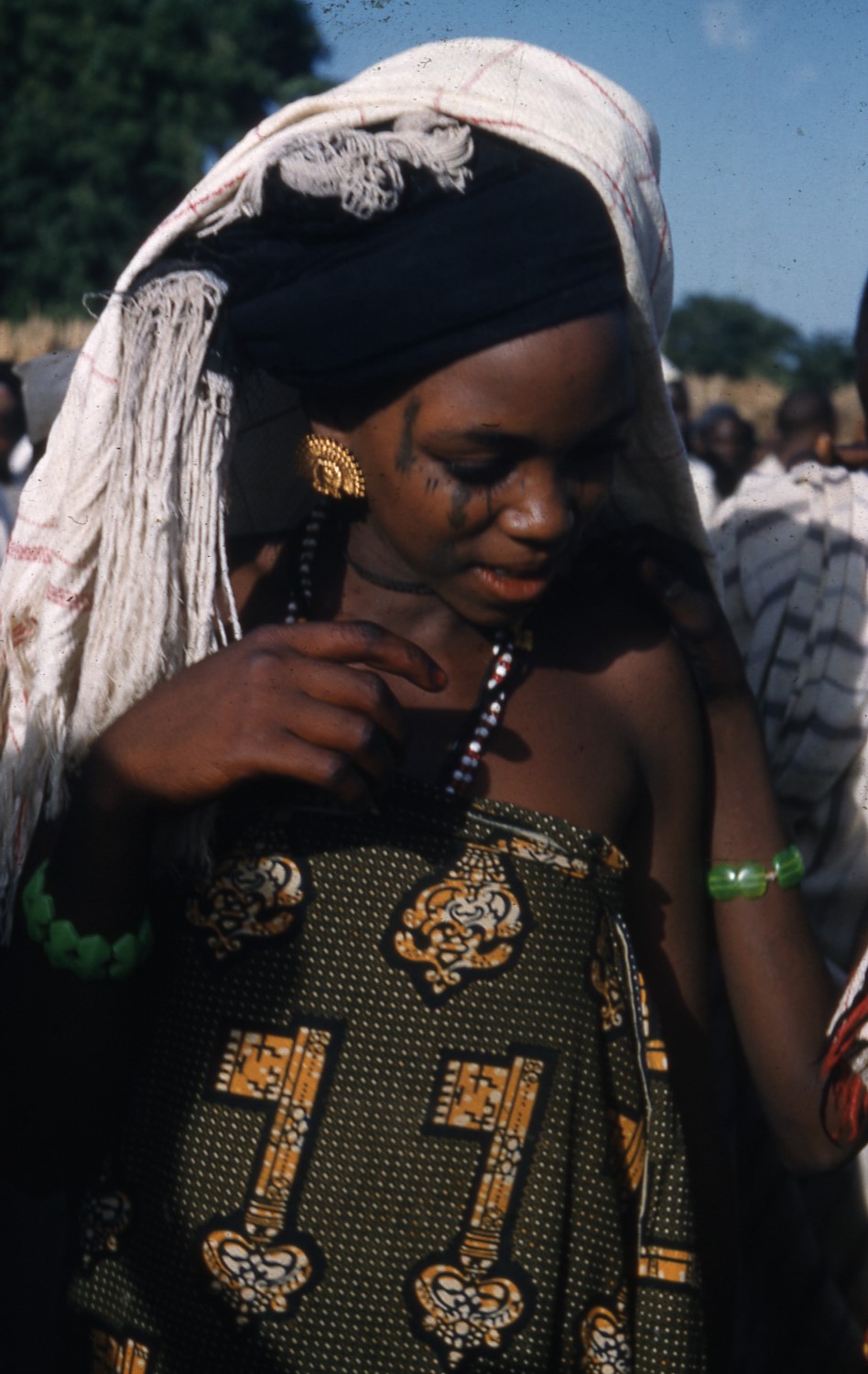
Jean Felicity Cole was born in Bodmin, Cornwall, on 20 April 1931. After completing school she studied for a sociology degree at LSE before going out to teach in northern Nigeria in 1953. Over the next few years she taught in different schools in northern Nigeria, mostly in the Hausa language which is spoken by millions of people in this part of the country, as well as in other countries such as Ghana and Cameroon. In Nigeria, it was spoken by the closely-related Hausa and Fulani tribes, and having learned the language, Jean was able not only to teach but also to converse with local families and develop a deeper understanding of their social lives and aspirations
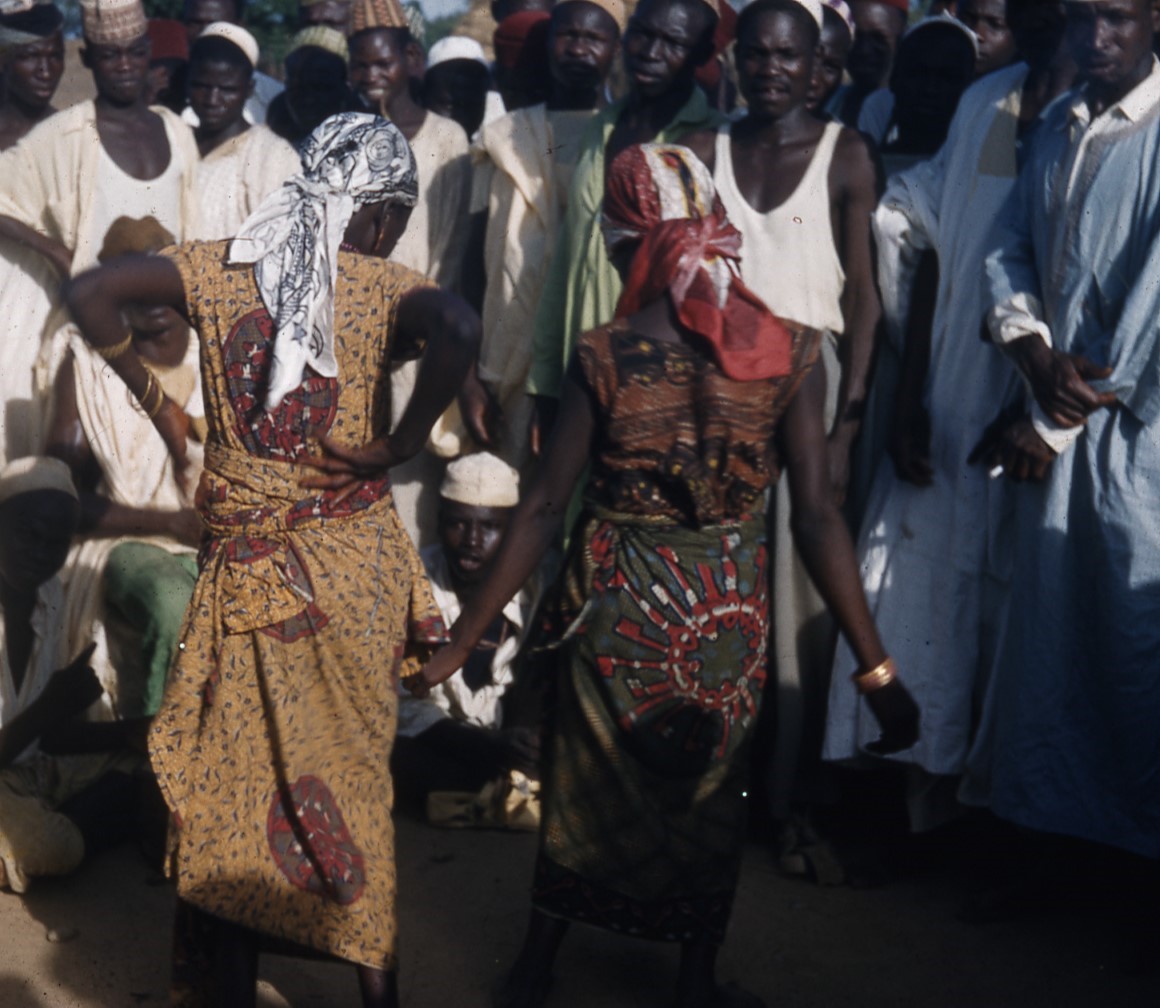
For the first two years or so she was based in a Girls’ School in Sokoto, also known as ‘the City of Shaihu and Bello.’ This is a reference to the founder of the Sokoto Caliphate, Shehu Usman dan Fodio (1754-1817), and his son Muhammadu Bello (1781-1837) who succeeded him as Second Caliph.
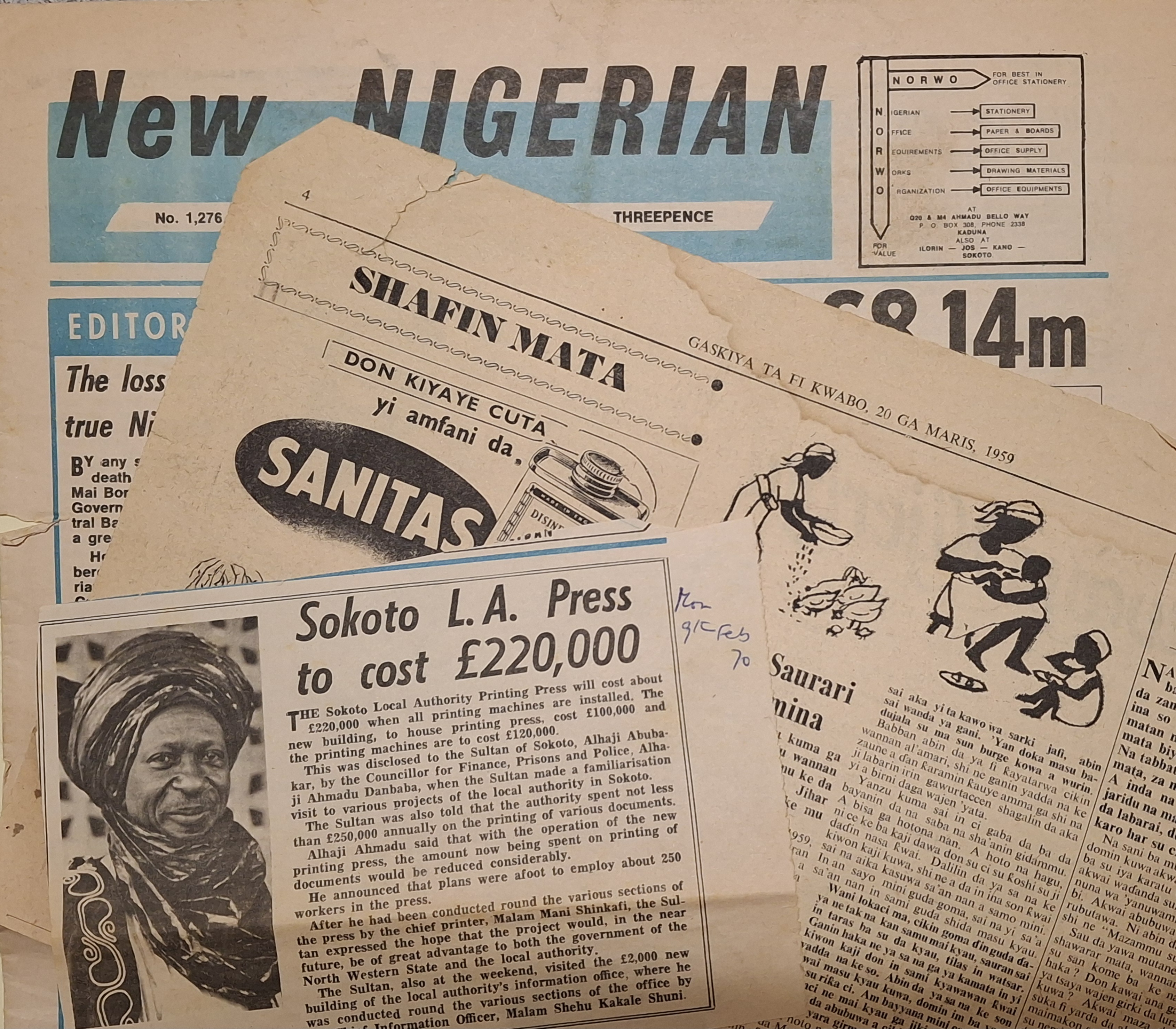
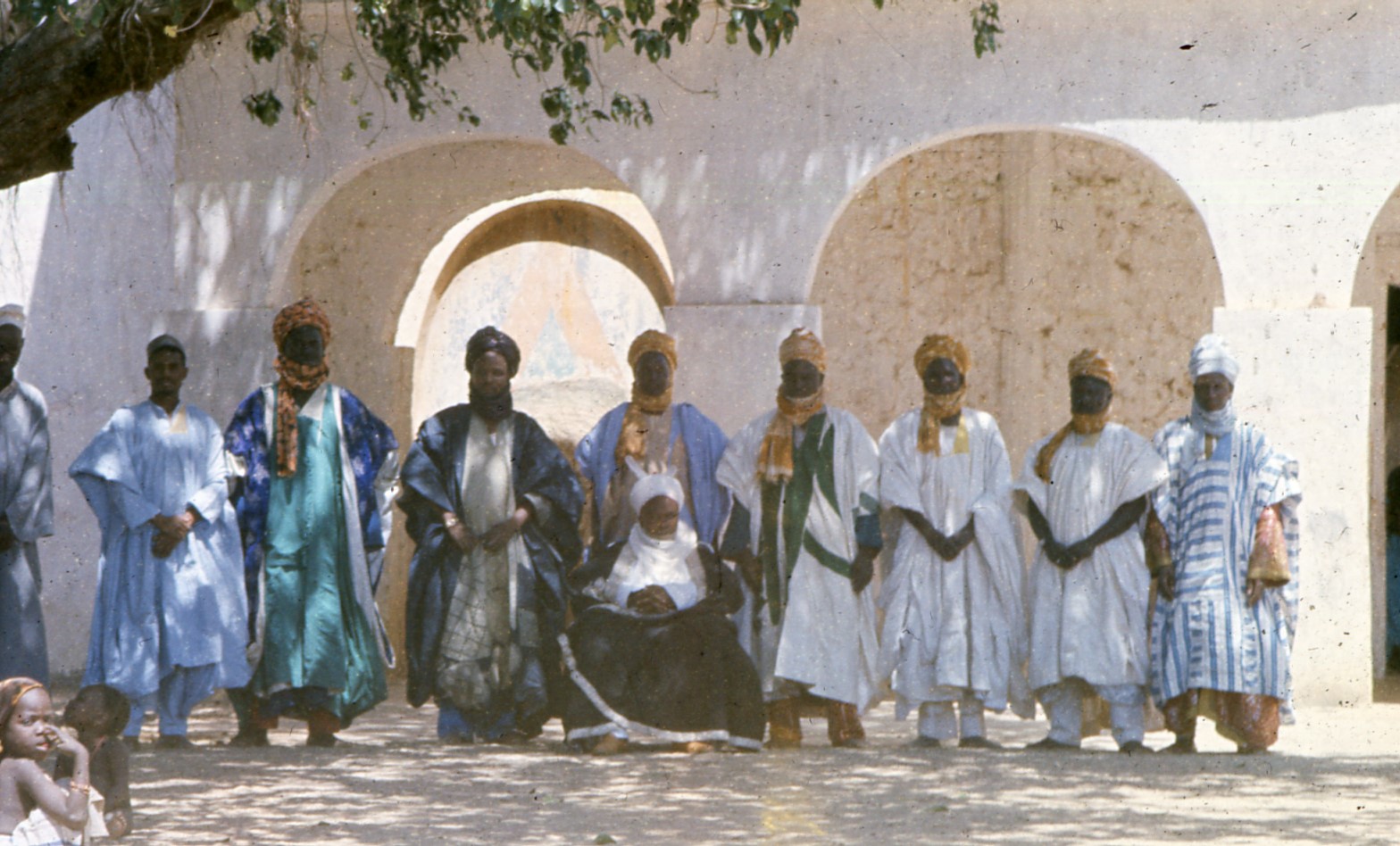
In Jean’s time, the Caliphate was ruled by Siddiq Abubakar III (1903-88), a direct descendant of Dan Fodio. He became 17th Sultan of Sokoto in 1938 and reigned for fifty years, until his death in 1988. George VI awarded him a KBE in 1944, and after Nigeria attained independence in 1960, he was made a Grand Commander of the Order of the Niger (GCON) by the Federal Republic of Nigeria in 1964. He was a supporter and government colleague of Sir Ahmadu Bello GCON KBE (1910-66), who was also descended from Dan Fodio. A photograph of him appears in the newspaper cutting above.
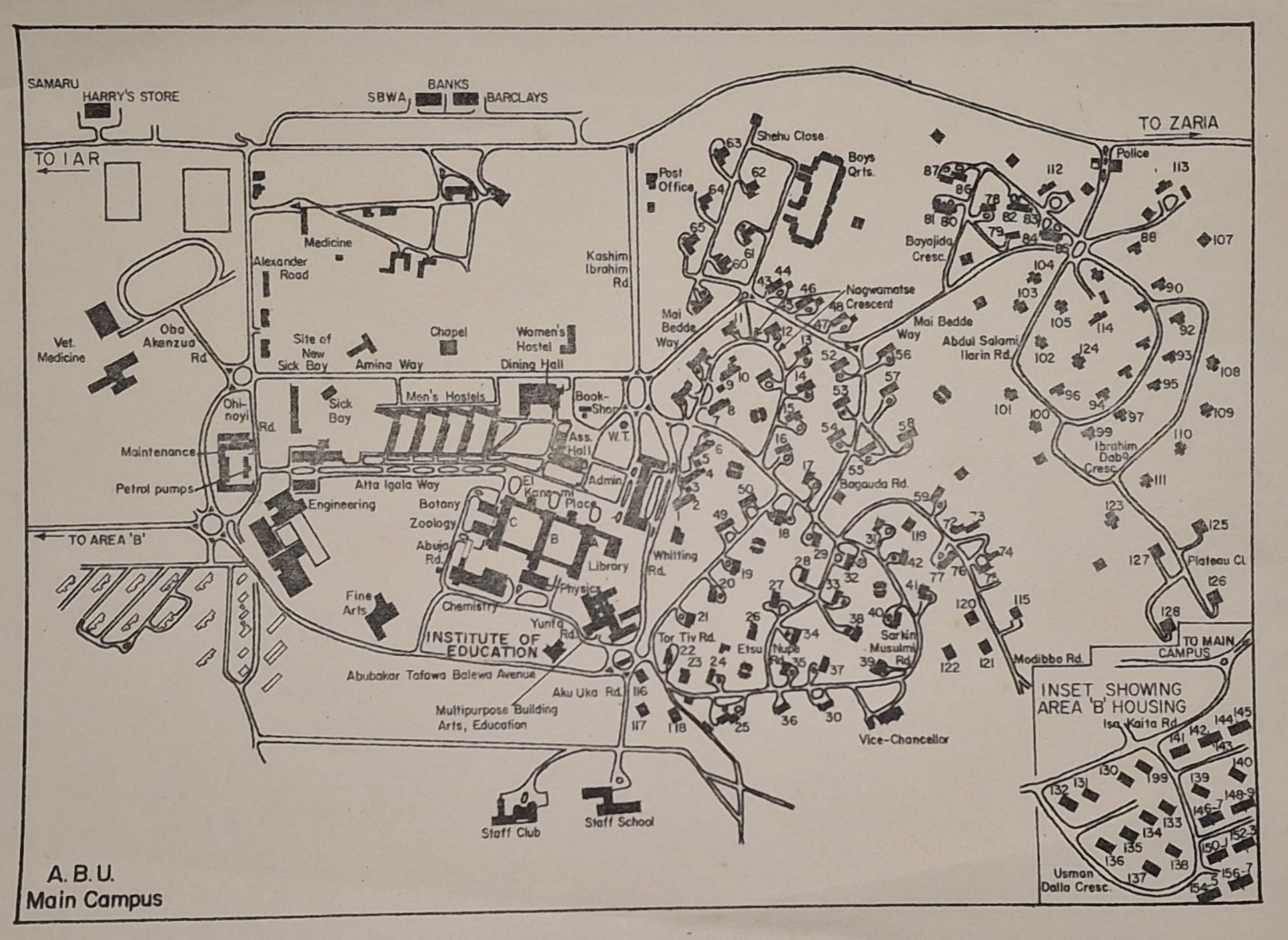
Ahmadu Bello University – where Jean later did her PhD – was founded in 1961, bringing together the School of Arabic Studies in Kano with the Nigerian College of Arts, Science and Technology, and the Agricultural Research Institute (both of which were at Samaru) along with the Institute of Administration at Zaria, and the Veterinary Research Institute at Vom. The new university was based at Zaria, some 400 km SE of Sokoto.
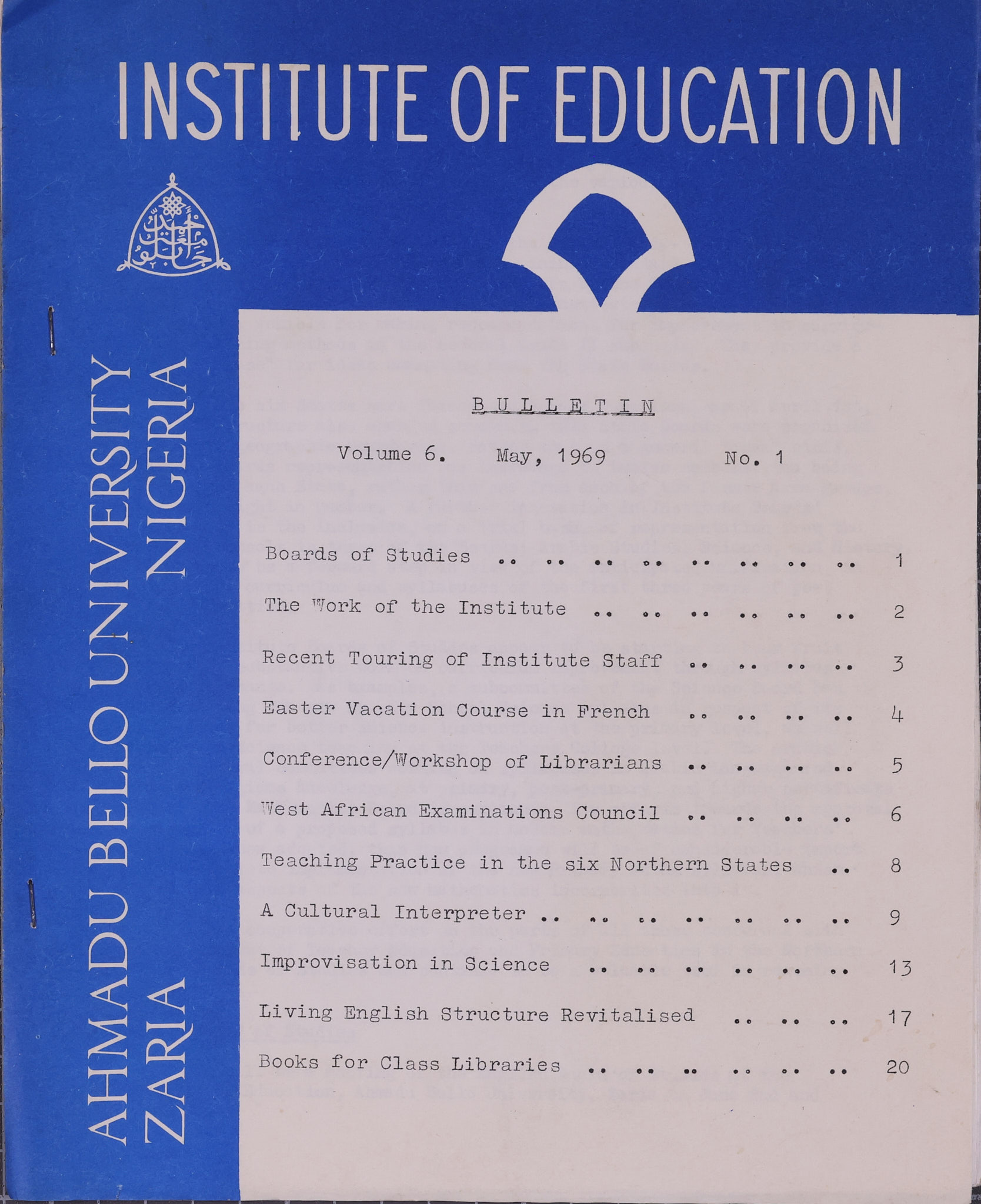
Issue of ABU’s Institute of Education Bulletin containing Jean’s article ‘A Cultural Interpreter’ about Modibbo Sodangi, an elderly woman who had recently died, having been responsible for teaching girls ‘tarbiyya’ (moral character) in Sokoto from 1938 until a few years before her death. Jean and Sodangi first met in 1953.
Marriage and Family Life
While in Nigeria she met Arthur Henry Tudor Trevor (1920-2003), son of the former Political Resident in the Persian Gulf, Lt. Col. Arthur P. Trevor ICS (1872-1930), who was then working in agricultural development. They married on Christmas Eve 1957 in Maiduguri, capital of Borno State, in NE Nigeria.
Much of her time over the next few years was spent raising her two sons, David (born in 1958) and his younger brother Tom (born in 1962). While they returned for some of the time to their house on the Hartland peninsula in North Devon, the Trevors remained in Nigeria and there are numerous family photographs of the young boys playing in the gardens and countryside.
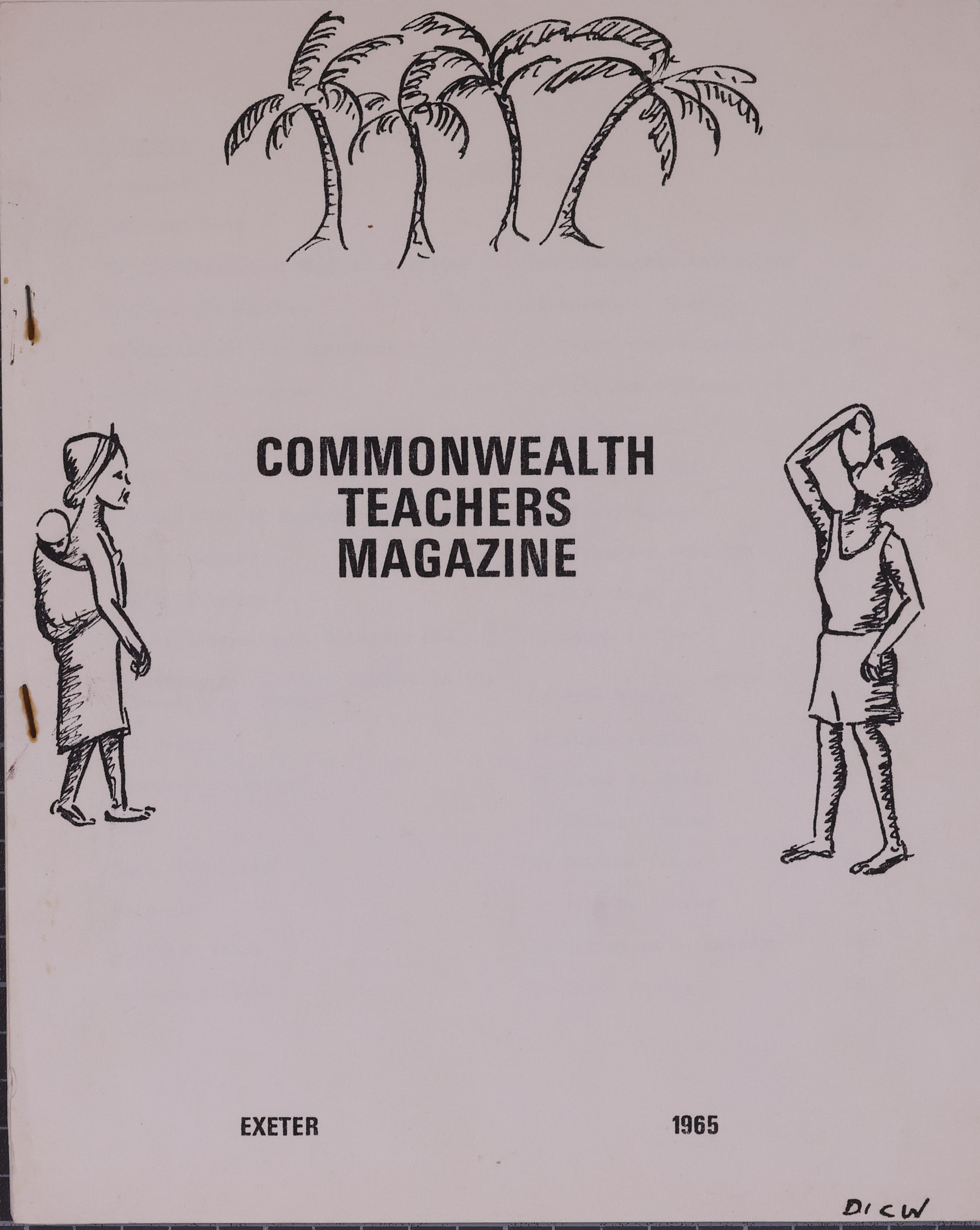
Tudor Trevor was involved in theatre and media production as part of his role as an agricultural development officer, and between 1958 and 1961 Jean worked with him in creating educational films and radio broadcasts in Hausa. Between 1964 and 1967 she taught African teachers at the University of Exeter and was appointed to the editorial team of the Commonwealth Teachers Magazine. A single issue is in the archive and provides some interesting impressions of England and Devon as recounted by teachers from countries such as Tanzania, British Guiana, Malawi and Jamaica.
The Development of Jean’s PhD
Jean’s experience of living and teaching in Nigeria for fourteen years, enriched by the conversations she had had in Hausa, had given her plenty of time to reflect upon the role of education in the lives of her pupils and their families. At some point her growing knowledge of the local community, combined with her evolving understanding of teaching practices and educational theory, combined to suggest to her the idea of researching these themes in a more formal study.
It is important to realise that her PhD was not undertaken as one single funded project, but was built around a series of short grants from different institutions, each of whom expected different things from her. Initially, her plan had been to write a fairly straightforward analysis of attitudes to female education, based on interviews with the schoolgirls, their families, local community figures and Islamic teachers, plus her own observations. After discussions with Gillmore Lee, Professor of Psychology at Leicester University, and Professor Robert LeVine of the University of Chicago, she was persuaded to follow their advice and switch to using formal quantitative methods to interpret her interview data. This involved devising questionnaires to which the questions could be assigned numerical values, that were then translated into code form, which could be recorded on punched cards.
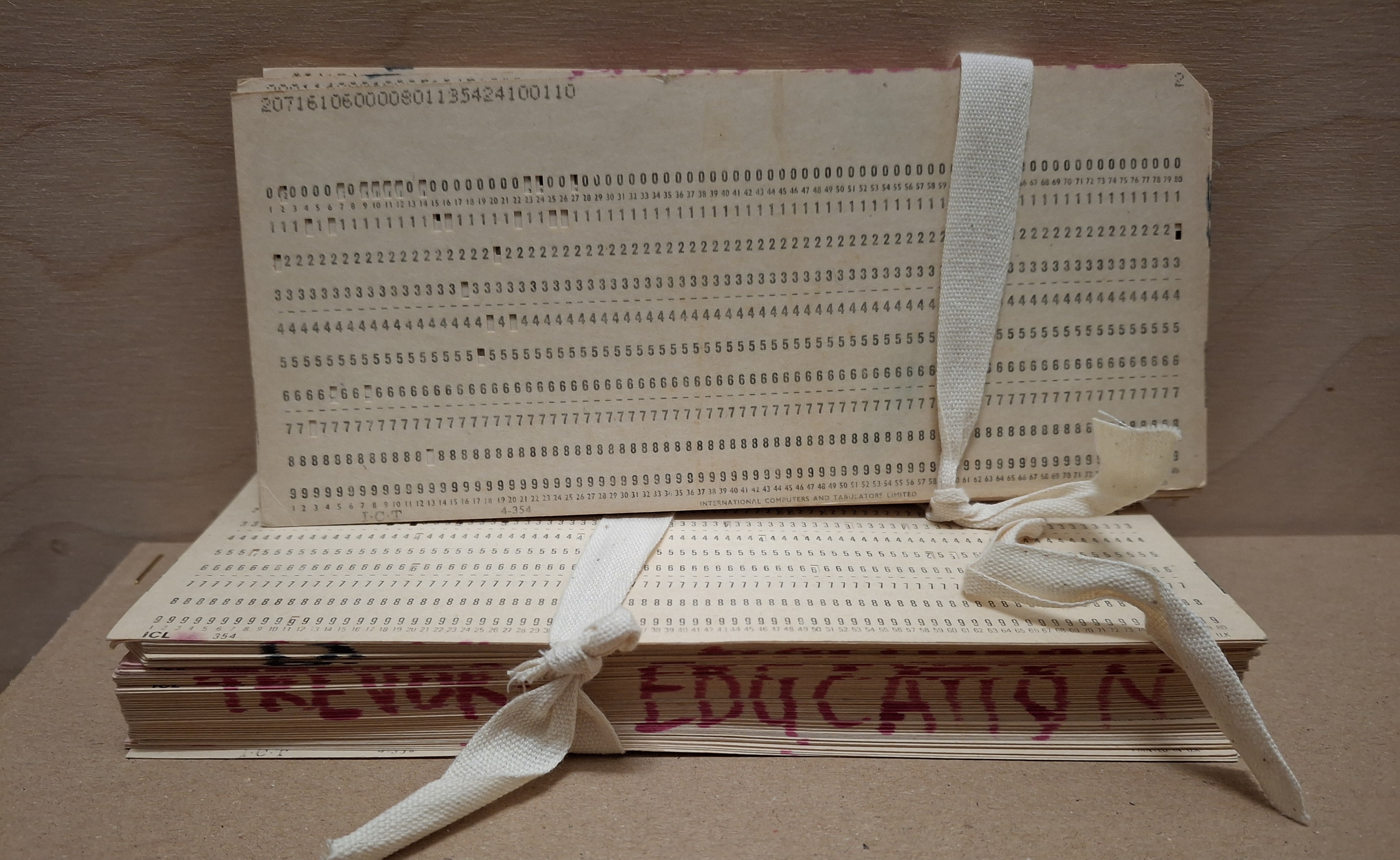
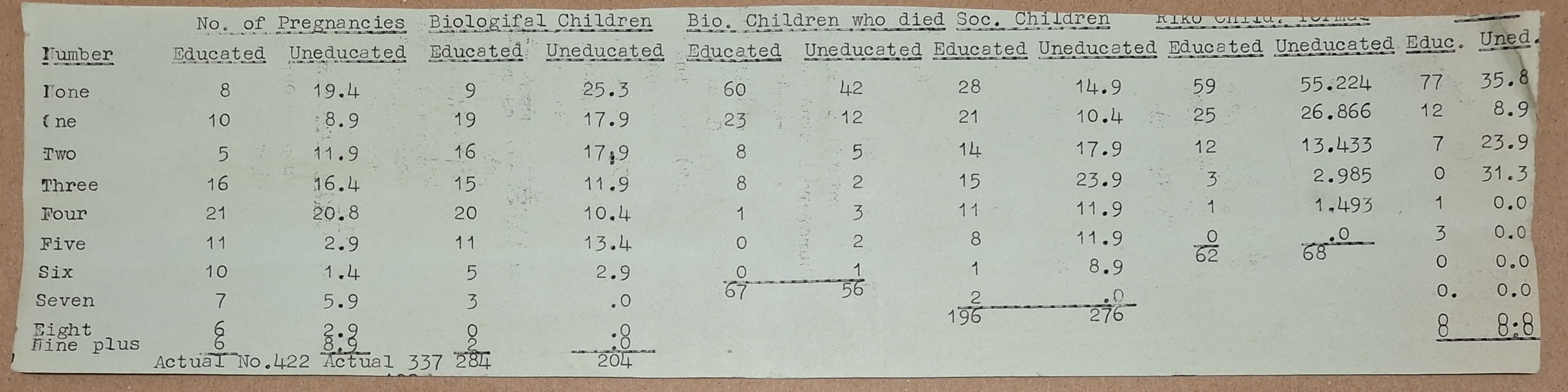
Some of Jean Trevor’s punched data cardsNumerical values used to analyse data as recorded on the punched cards
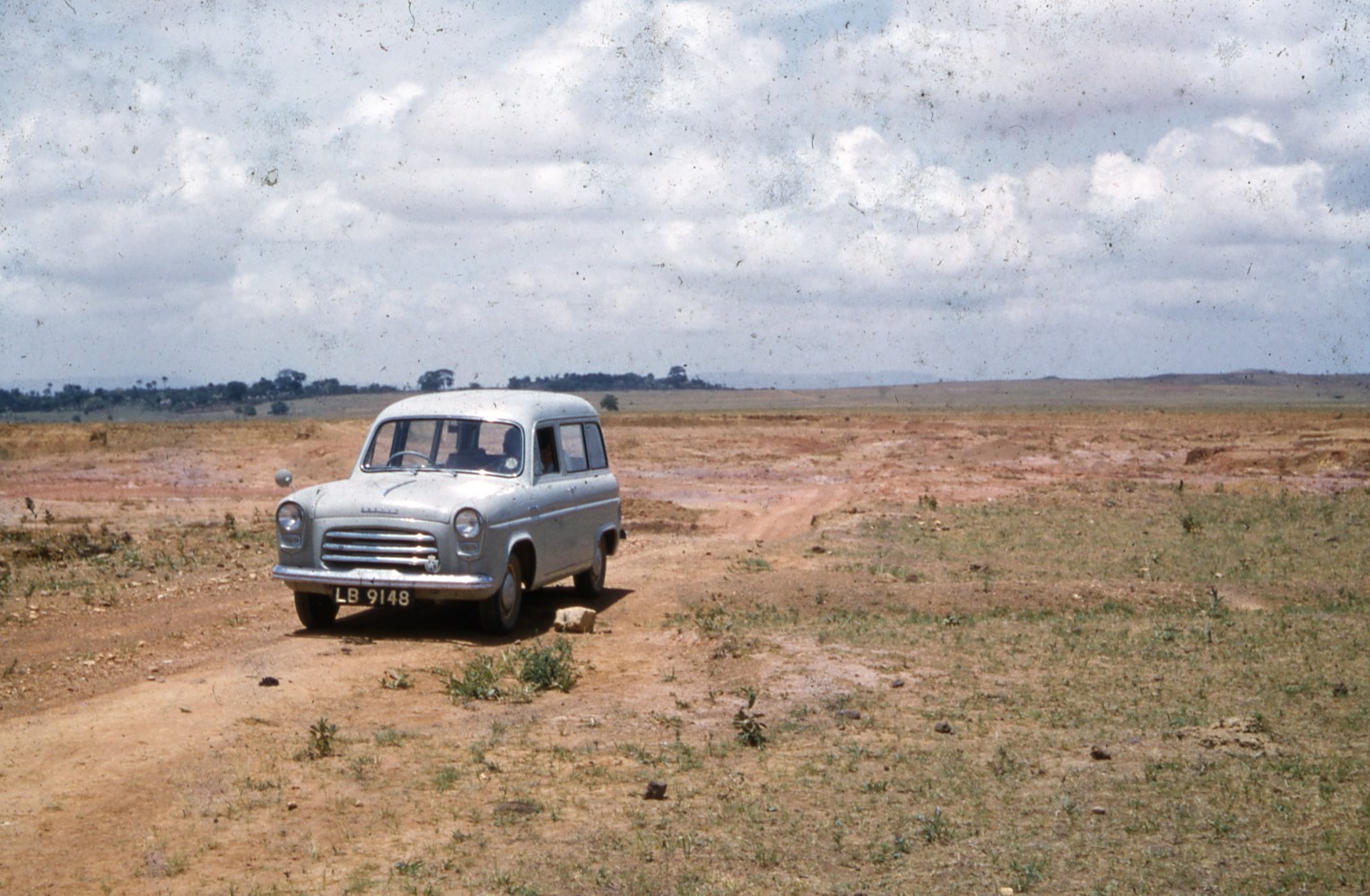
This work was carried out in challenging circumstances, with much of her grant money being spent on car repairs as she tried to drive around the countryside interviewing young Hausa women (see photo below!). Initially funded by a Commonwealth Postgraduate Research Scholarship, she then obtained – through the help of Professor LeVine – a Research Fellowship within the Child Development Centre at Ahmadu Bello University (ABU), Zaria in 1968. The University of Chicago money stopped at the end of December 1969 due to the US Department of Education cutting its grant (at the time of writing, this sounds very topical!) but further support from the Carnegie Foundation and the Ford Foundation allowed her to pursue her research under the auspices of the Department of Community Medicine at ABU. The Overseas Development Administration (ODA) offered Jean an Educational Development Award of £2,500 p.a. to cover the period between September 1971 and March 1972, but she then had to apply to the Population Council for another grant, for which she stated that her thesis title was ‘Effects of schooling in Moslem women’s attitudes to family size, child rearing practices and family planning in North West Nigeria’, emphasising its relevance for population studies. The University of Exeter then appointed her an Investigator in the Department of Education (Population Council Research Project) for six months from January 1973 to help her write up her thesis.
Academic Theories and Scholarly Circles
A name that appears regularly in Jean’s notes is that of Sir Frederick Lugard (1858-1945), a colonial administrator who was closely involved in the country’s affairs in the early 20th century. After working with the Royal Niger Company, he was appointed High Commissioner of the newly created Protectorate of Northern Nigeria in 1900, Governor of both the Southern and Northern Protectorates in 1912, and in 1914 became the first Governor-General of Nigeria, created through the unification of the two protectorates. While his policies included suppressing Fulani resistance to British rule – he organised the military campaign against the Emir of Kano, capturing Kano in 1903, as well as the Sultan of Sokoto Muhammadu Attahiru I, who was killed in battle in 1903 – Lugard was also intensely interested in education. He established a new Education Ordinance and Education Code for Nigeria in 1916 and his book The Dual Mandate in British Tropical Africa (1923) lays out in detail his theories about the place of education in colonial administration, stressing its value as a tool for development.
However, the close link between education and colonisation was deeply problematic in post-1960 independent Nigeria, given that Lugard regarded Africans as racially inferior to Europeans and his educational policy was explicitly utilitarian, aimed at producing loyal subjects who served their local community for the greater good, rather than seeing education as something of value to an individual in its own right. There was also an imbalance between the north and the south, both in terms of education and political strength, which contributed to the later divisions and secessions that arose during the second half of the century.
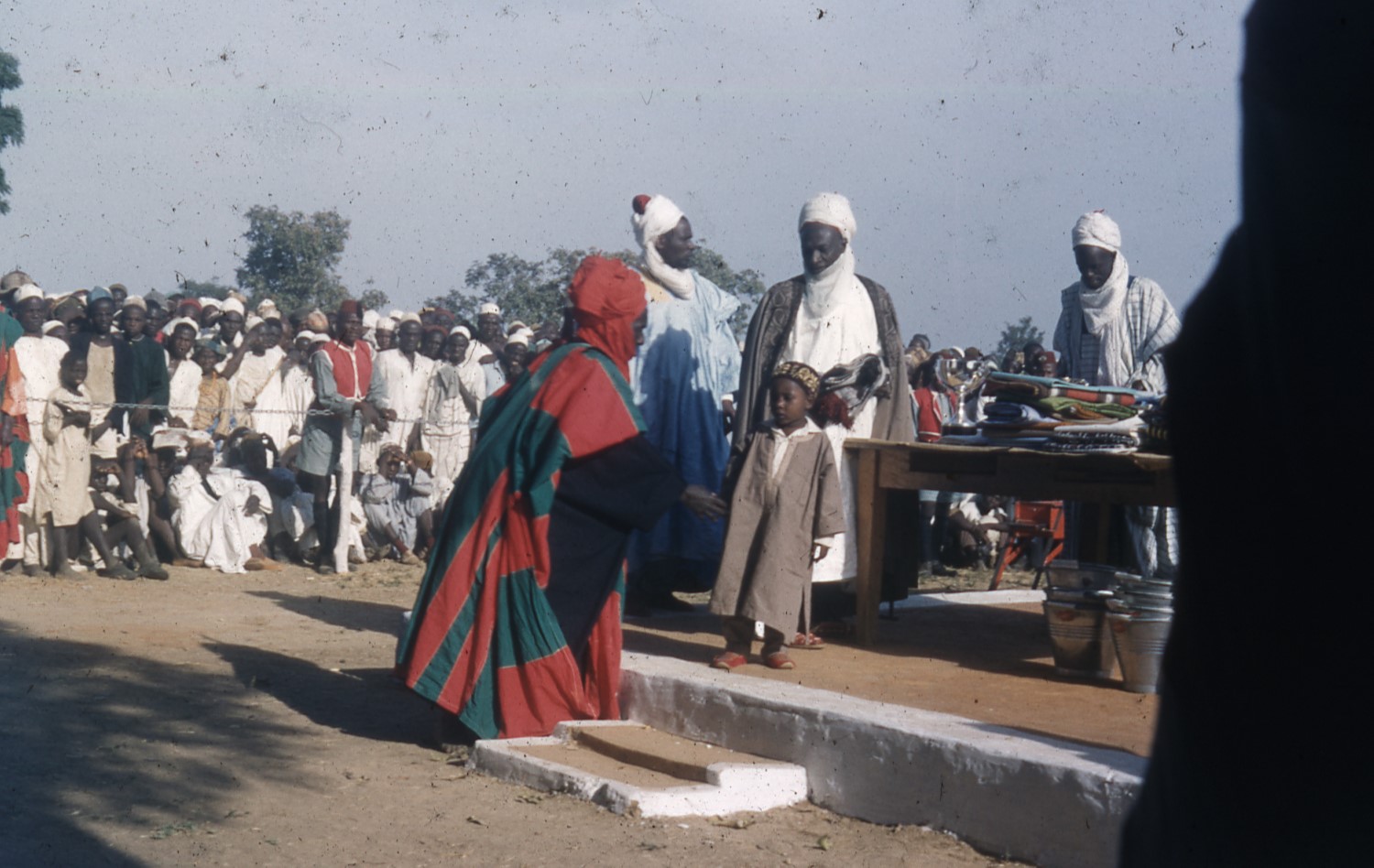
A prize-giving ceremony at an agricultural fair
As Jean’s research focused on attitudes towards education and its purpose, she needed to engage with the ideas and legacy of Lugard, as well as those of contemporary sociologists, anthropologists and others. She collaborated a few times with the late Jerome H. Barkow (1944-2024), a professor at Dalhouse University in Nova Scotia who had spent many years studying the Hausa in Nigeria and Niger; Jean helped with a conference paper and there are several letters between them in the archive. Jerry wrote to her about another academic: ‘I find him quite old-fashioned theoretically, very much vulnerable to contemporary criticism of much African anthropology as frankly colonial’ and Jean’s papers reveal that she did not always see eye to eye with the views and conduct of senior figures working in her field.
The nature of her work meant she was in contact with a wide number of academics and professionals, in Nigeria, the UK and the USA, including anthropologist Sylvia Leith Ross (1884-1980) who settled in Nigeria in 1907 and founded girls’ schools in both Lagos and Kano, Dr Ishaya Sha’aibu Audu, Vice-Chancellor of Ahmadu Bello University and former physician to Bello himself, Professor Umaru Shehu of the ABU Institute of Health, Professor Richard D’Aeth of the University of Exeter’s School of Education, as well as prominent scholars such as Professor Mervyn Hiskett (1920-94) and anthropologist Professor Michael G. Smith (1921-93). There are also numerous letters from Hausa women, young girls, local teachers and the wives of important figures around Sokoto and Kano.
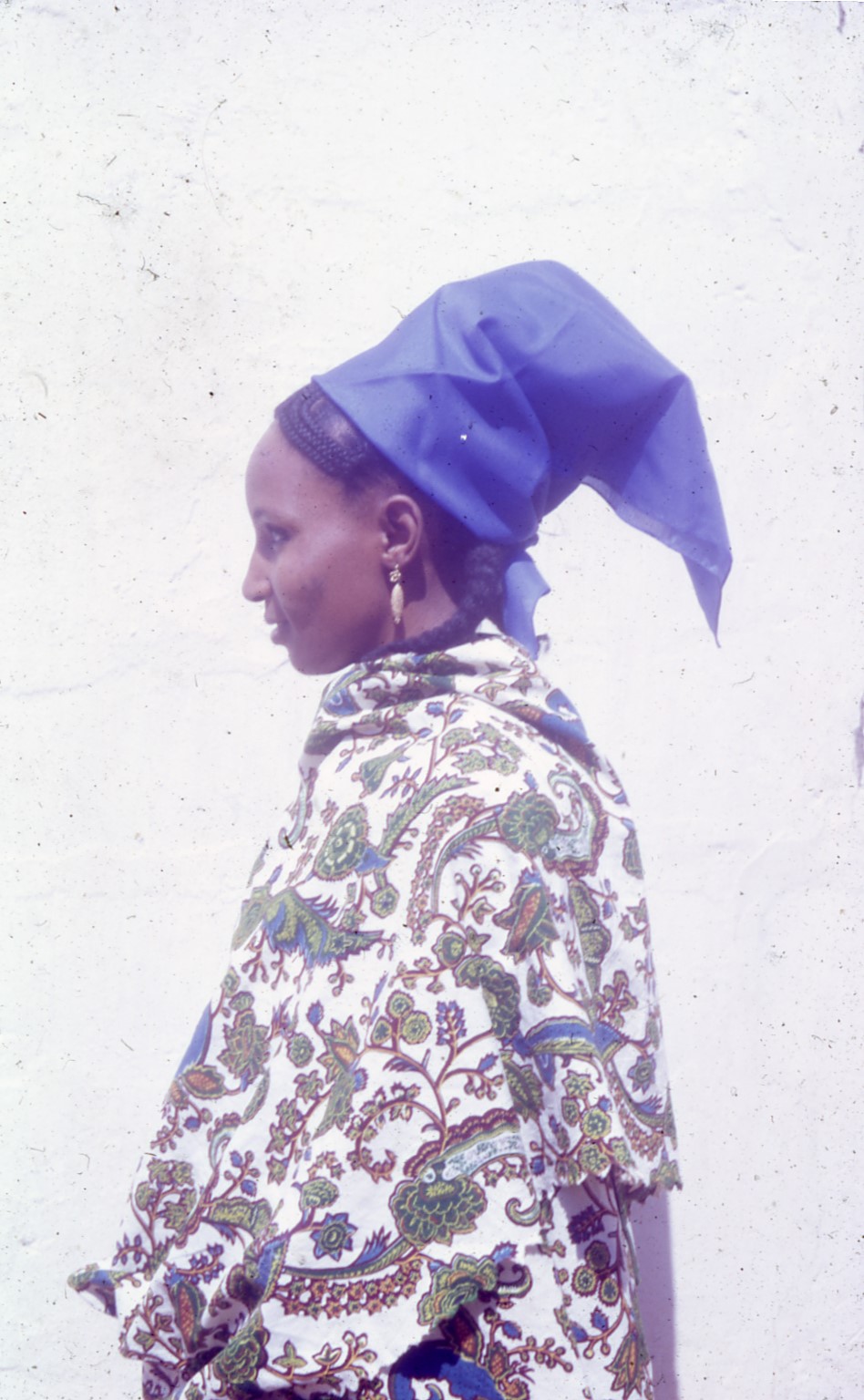
Islamic Aspects: from Jama’atu Nasril Islam to Boko Haram
Despite the uncertainties and trials of her PhD research, Jean often gave thought to finding employment once she had finished her PhD, and in 1973 she was invited by the Jama’atu Nasril Islam (Society for the Progress of Islam) to apply for the post of Principal of the Moslem Ladies College in Kaduna – an offer she declined, as she wanted to concentrate on completing her thesis. This was, however, recognition of the respect with which she and her work were regarded in the local Islamic community.
Jama’atu Nasril Islam (JNI) was established in Kaduna in 1962 by Sir Ahmadu Bello, Sardauna of Sokoto, as an umbrella organisation for the promotion of Islam, following advice from the Grand Khadi of Northern Nigeria, Alhaji Abubakar Gummi.
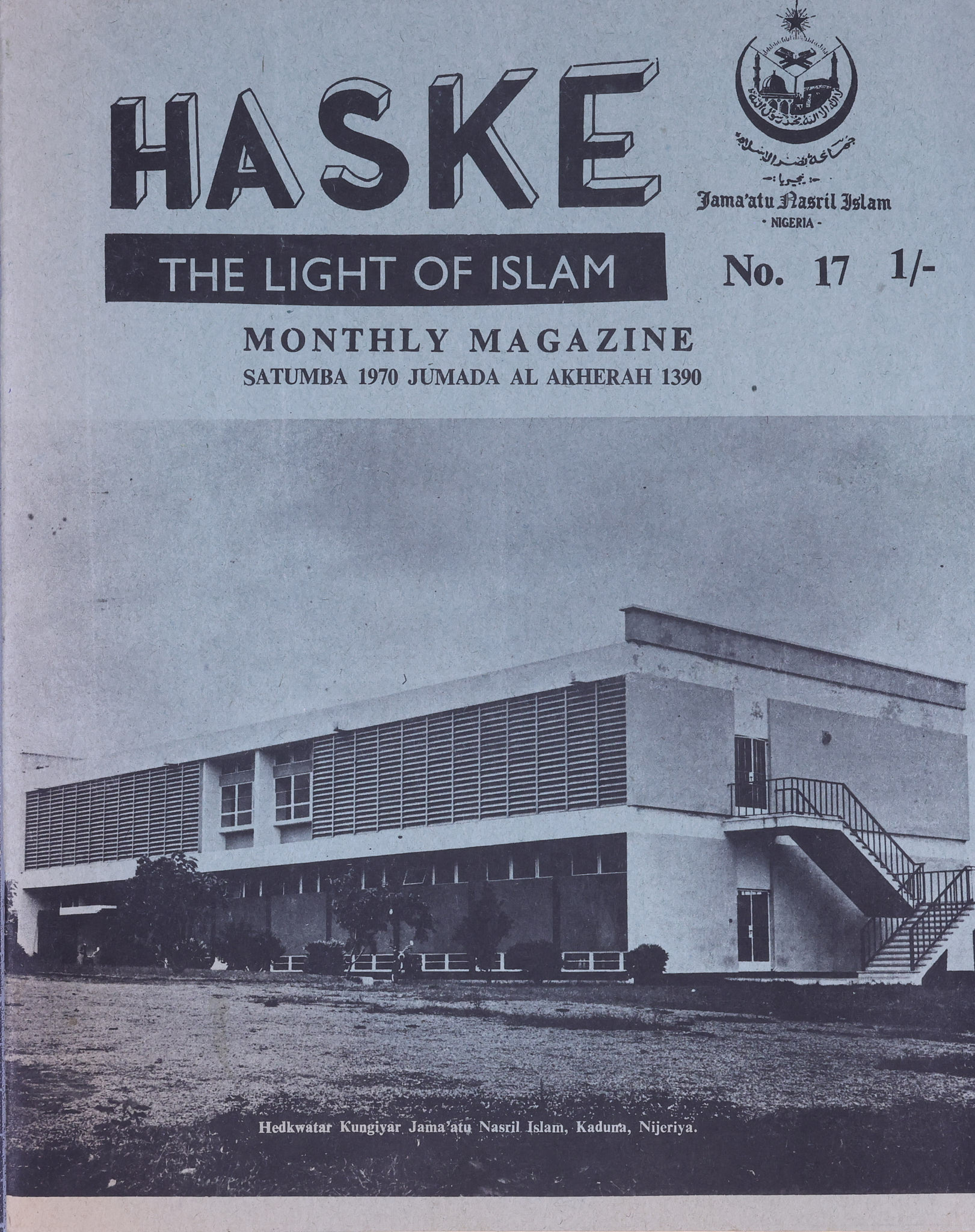
While Jean’s research focused on the social and cultural attitudes towards female education – such as whether girls who were expected to marry at a young age believed schooling would benefit them – this was intrinsically related to Islamic views on the value of knowledge, the role of women, and the differences between Quranic schools and western theories of education. Many of Jean’s notes related to Islam, including records of conversations she had with girls’ families, but she also undertook an interview with Alhaji Abubakar el Nafaty, Secretary of Jama’a Nasril Islam in December 1968, and another interview about education with the Grand Khadi, Alhaji Abubakar Gummi, the following May. Accounts of these interviews are in the archive, plus her description of a visit to the main Islamic school at Sokoto in February 1969, as well as a copy of monthly magazine Haske: The Light of Islam No.17 (1970) and various religious texts in both Hausa and Arabic.
Islamic attitudes towards western education in Nigeria have, of course, come under intense scrutiny in recent years since the rise of the militant group known as ‘Boko Haram’, which is often (mis-)translated as ‘Western education is forbidden.’ The group was founded in 2002 and its actual name in Arabic is Jamā’at Ahl as-Sunnah lid-Da’wah wa’l-Jihād, with the Hausa phrase ‘Boko Haram’ better translated as a prohibition of ‘westernization’ or ‘western civilization.’ The educational aspect is, however, a key element of the influence that the group so fiercely opposes, and their brutal campaign has seen the killing of tens of thousands of Nigerians, including many children, as well as the infamous kidnapping of almost 300 schoolgirls from a school in Chibok in NE Nigeria.
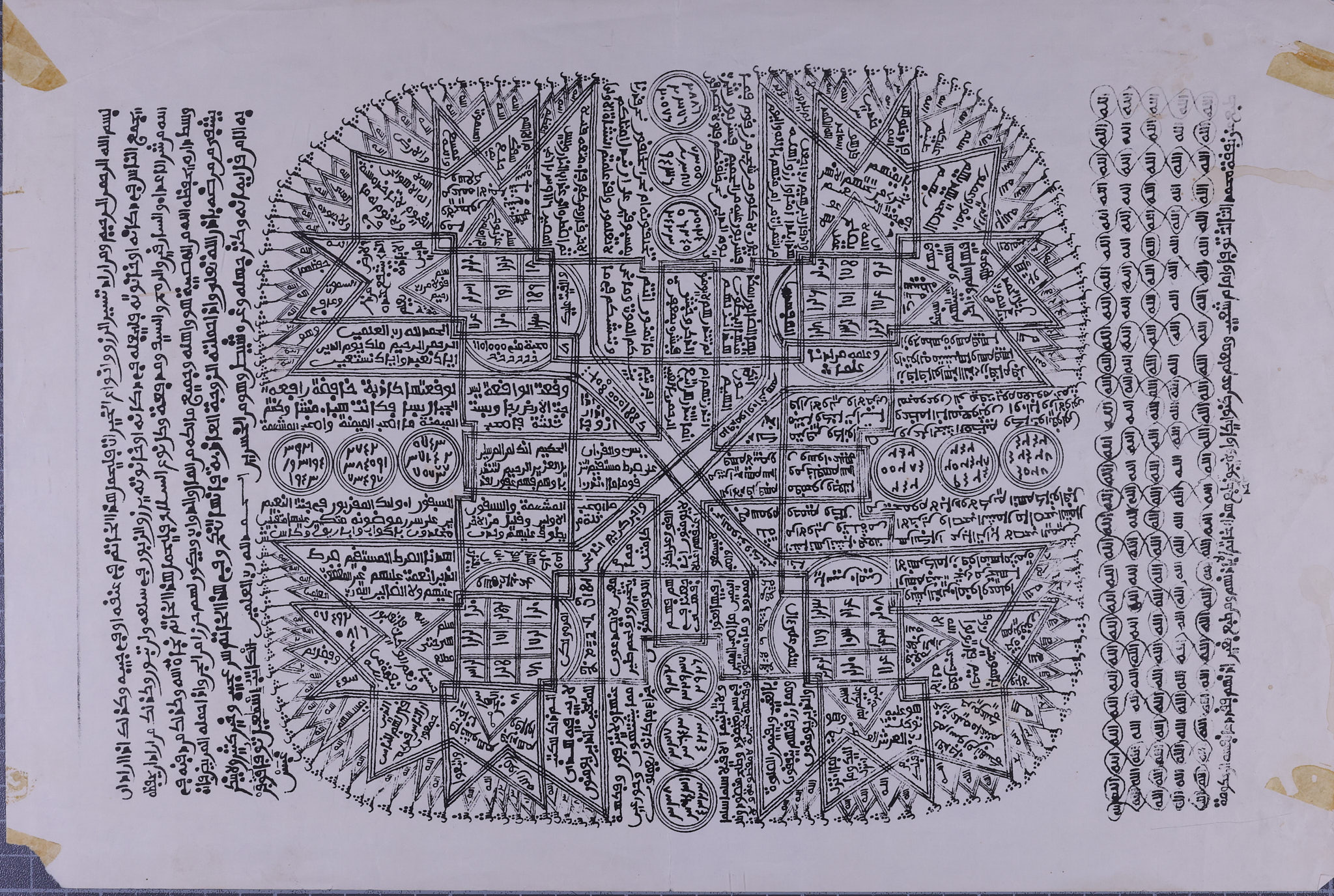
Much has been written about ‘Boko Haram’ in recent years, but the scale of violence and terror associated with the group’s campaign has not created a climate that supports much nuanced analysis. It is therefore interesting to find frank yet subtle discussions amongst Jean’s papers, such as her interview with the Emir of Gwanda in February 1969, in which he explained distinctions between attitudes to female education in Gwanda compared to Sokoto, and told her ‘Your boko can be as good at addini [religion] as a traditionally trained girl.’
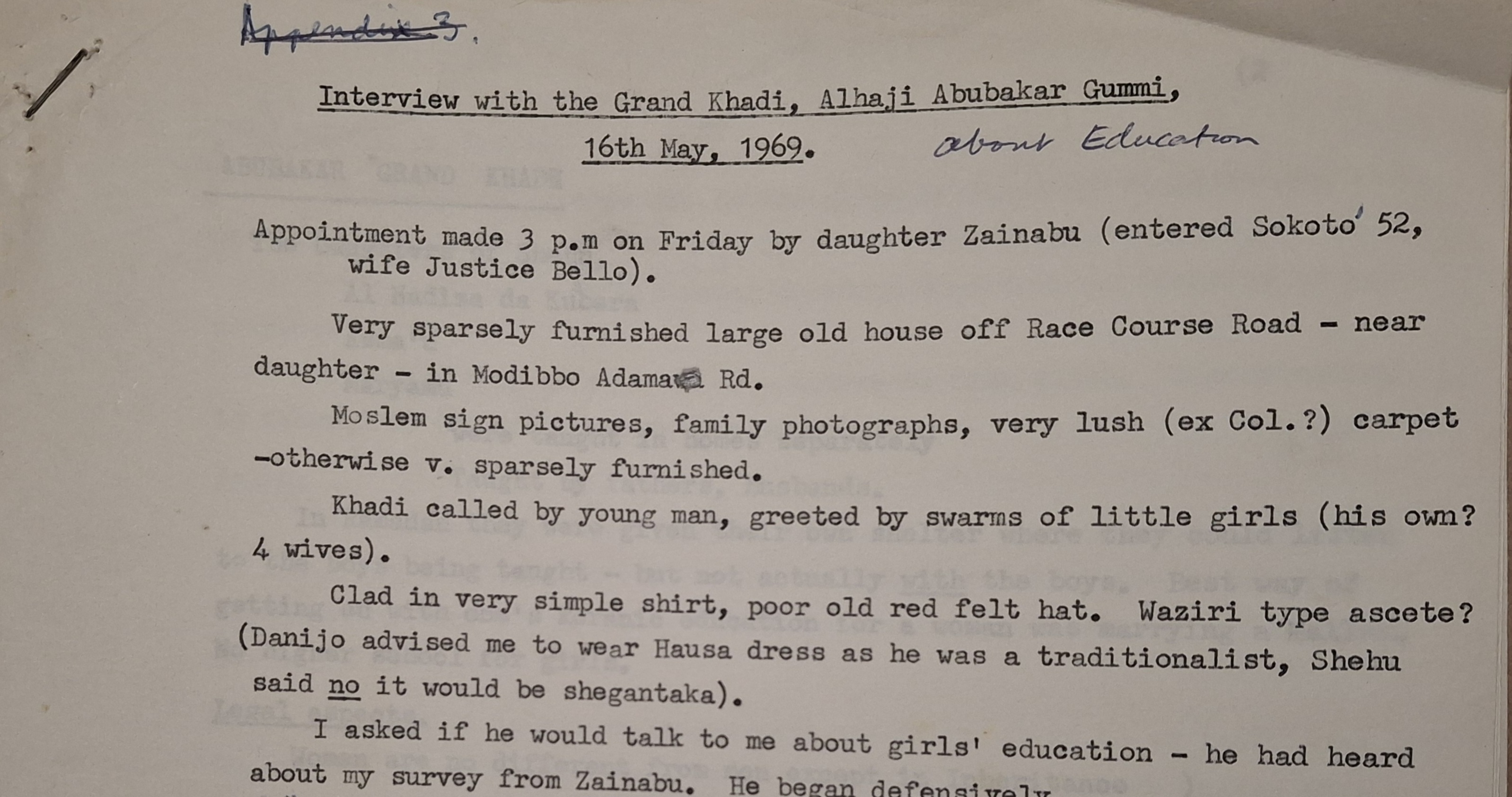
She and Abubakar el Nafaty even discussed the theology of Teilhard du Chardin, exploring different understandings of the relationship between science and religion. In her conversation with the Grand Khadi, they talked in more detail about boko makaranta [western education] and his view that ‘Criticism of Boko is due to the false division of religion and secular life. This is a mistake – in Islam everything is a unity.’ In addition to these interviews, Jean recorded the views and stories of the wives of local professors and teachers, recalling their own experiences of education decades earlier, sometimes by European missionaries, and how the British colonial rule of Nigeria had changed how the people lived.
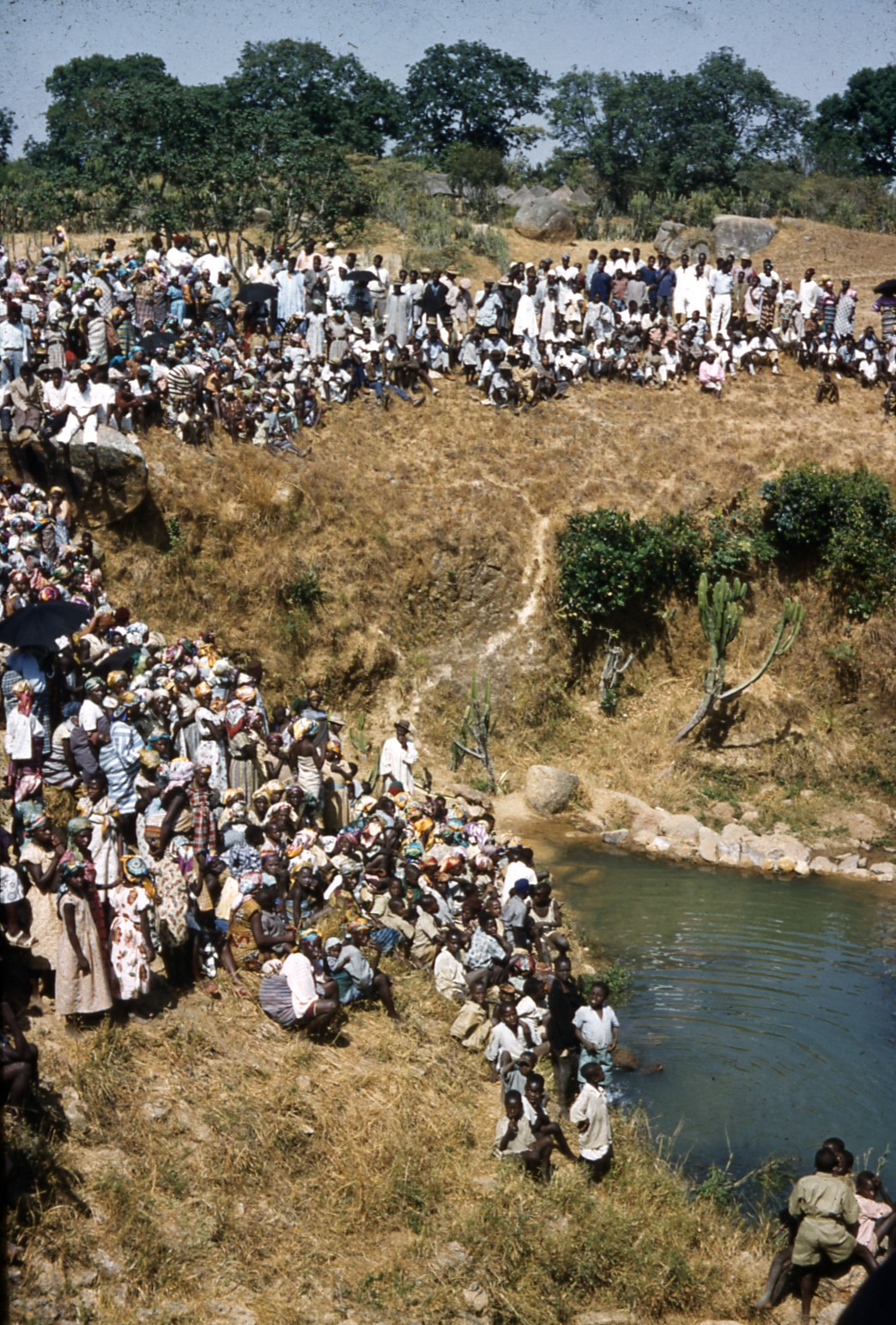
Photograph of a mass baptism in a river, possibly part of the Christian revival in the early 1970s
The papers, photographs, correspondence and other documents in the Jean Trevor archive provide insights into different aspects of Nigerian life at this period, including developments in both secondary and higher education, agricultural methods, Islamic movements, colonialism and the British relations with African countries at the end of the empire, as well as community health, textiles and costume, marriage customs and popular culture.
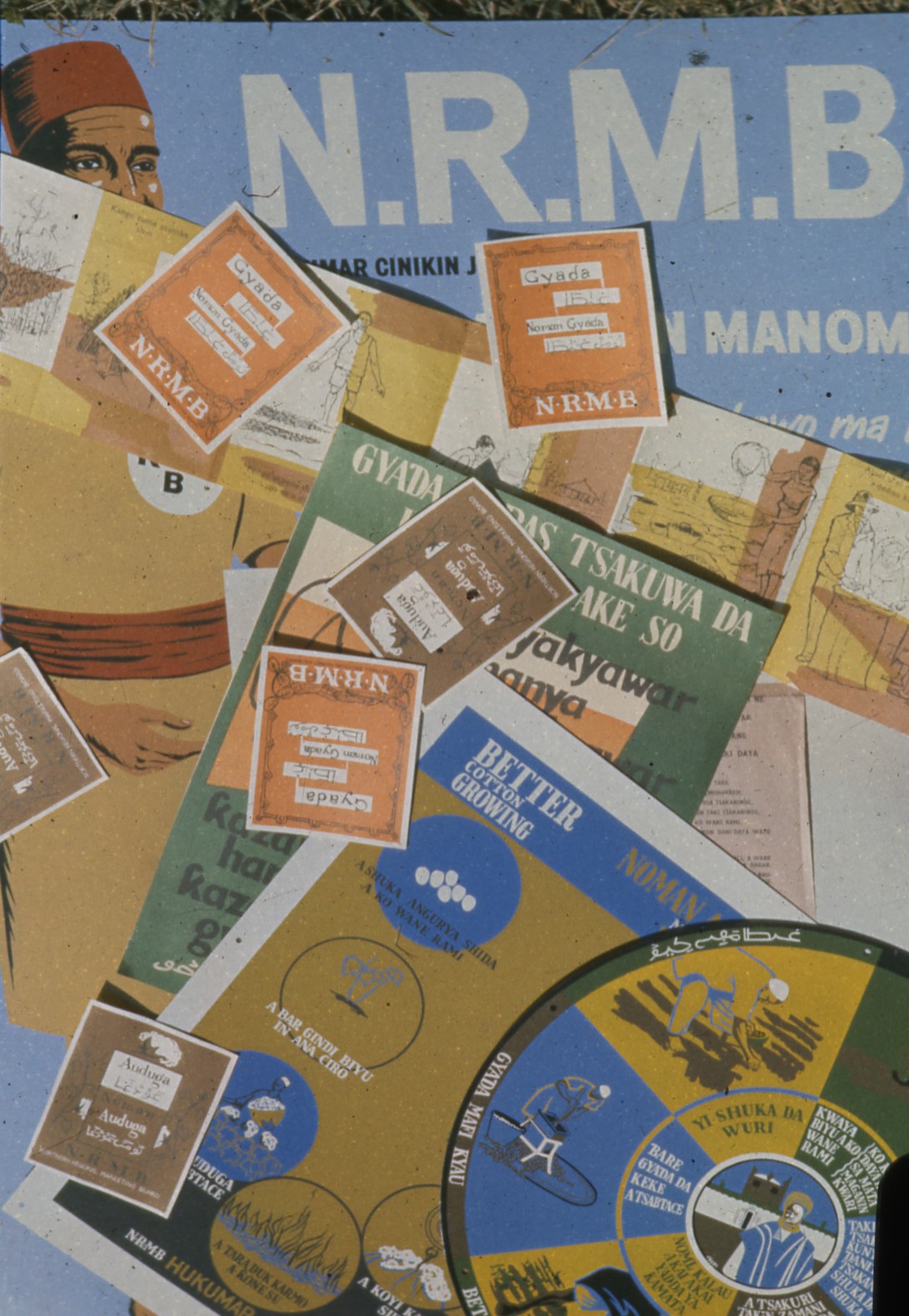
Northern Region Marketing Board materials
The Northern Region Marketing Board was the new name in 1954 for what had previously been the Nigerian Groundnut Marketing Board. We have material on the groundnut industry in Nigeria within the archive of the Imperial Institute (EUL MS 61):
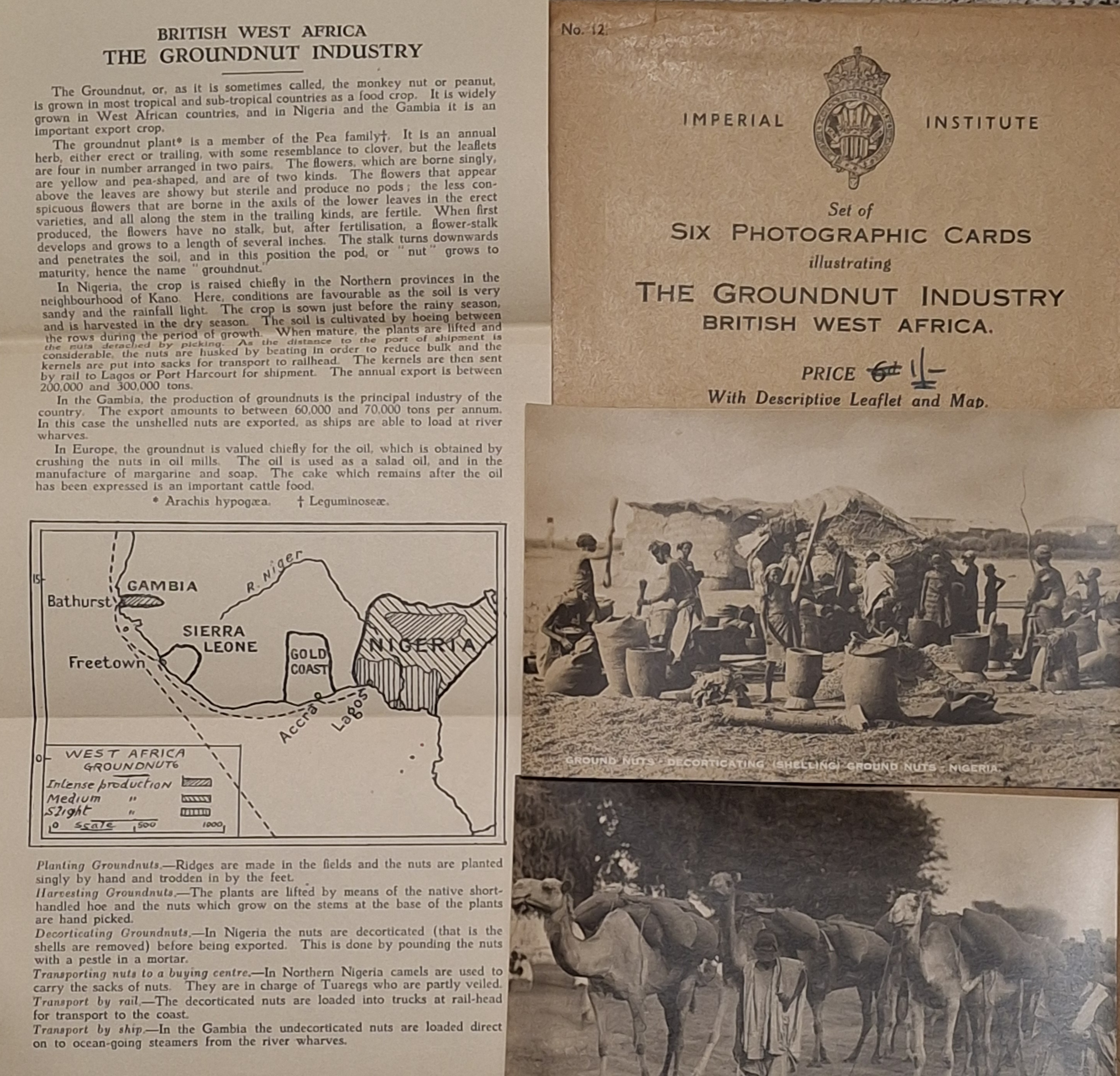
The archive catalogue for EUL MS 79 can be browsed here.
To mark the 50th anniversary of the death of Jean Trevor this year, an event is being held at the University of Exeter on 2 July that will include a presentation from a visiting Nigerian scholar – more details will follow shortly.
Some writings by Jean Trevor:
‘A Cultural Interpreter’, Bulletin of the Institute of Education, Ahmadu Bello University Vol.6, No.1 (May 1969) pp.9-12
‘A preliminary report on the demographic aspects of a study of family change in traditional Moslem Fulani/Hausa urban centres – Sokoto’ [unpublished typescript]
‘Family change in Sokoto: a traditional Moslem Fulani/Hausa city’ in J.C. Caldwell et al (eds.), Population growth and socio economic change in West Africa (Columbia University Press, 1974)
‘Traditional Values and the Traditional Position of Women in Sokoto City’ [unpublished typescript]
‘The Education of Moslem Hausa Women of Sokoto, N.W. Nigeria’ [unpublished typescript]
‘Moslem women: what did our school do for them?’, (manuscript)
‘Moslem school girls: did our school help or hinder them?’ [unpublished typescript, January 1974]
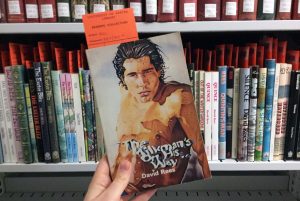
This year, in collaboration with the Section 28 and Its Afterlives project, Special Collections was pleased to welcome Chloë Edwards on an internship to explore student publications in the University Archive to find out what they can tell us about LGBTQ+ lives and the impact of Section 28 at the University. Below, Chloë shares her findings.
~~~~~~~~~~~~~~~~~~~~~~~~~~~~~~~~~~~~~~~~
The Background of the Project
I was delighted to be offered an archival internship with the Section 28 and Its Afterlives project team and the University Library’s Special Collections. Section 28 of the Local Government Act, in place from 1988 until 2000 in Scotland, and until 2003 in England and Wales, prohibited local authorities from “promoting homosexuality” as a “pretended family relationship”. This National Lottery Heritage funded project explores the impact of Section 28 and its consequences on local lives in the South West.
My role involved searching for articles and discussions pertaining to Section 28 in Exeter’s student publications, a task which had struck a chord with me for several reasons. Firstly, owing to its proximity to my ongoing PhD research for my thesis entitled Listen Without Prejudice: Queer Masculinities in the Popular Music Cultures of Thatcher’s Britain. Secondly, as a woman from Cardiff, I am always supportive of projects unearthing LGBTQ+ histories and experiences beyond the largest urban spaces across the nation. Lastly, I happened to write and edit articles for Exeter’s current student publication, Exeposé, for two years as an undergraduate. Collectively, as a result, I was eager to begin poring over back issues of Exeposé and its predecessors, as valued records of the lives and concerns of local undergraduates who have progressed through the university.
After discussion with the Section 28 and Its Afterlives team and Special Collections archivist Annie Price, I began my research into Exeter’s student newspapers. We had decided to begin my research at the point at which the Sexual Offences Act 1967 partially decriminalised sex between men over the age of 21 in England and Wales. This origin point meant that I could begin my research with a thorough overview of the documentation of attitudes and legislative changes to gay and queer lives in the UK leading up to the enactment of Section 28 in 1988.
The Early Thatcher Years & Gay Lives on Campus
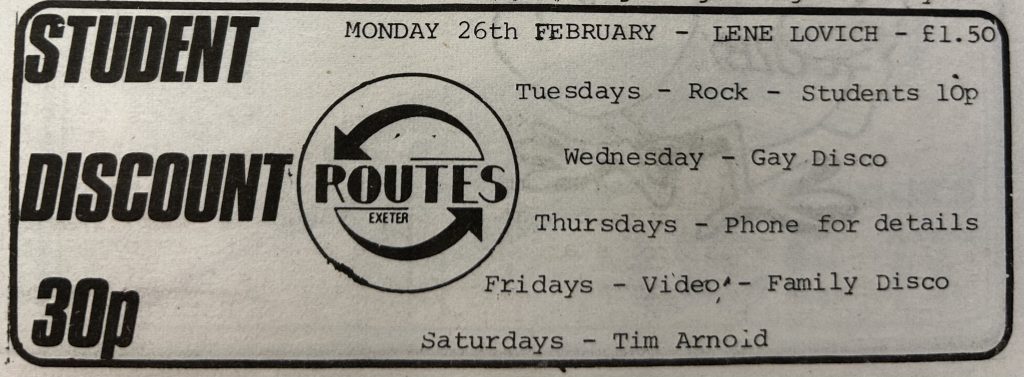
The South Westerner was the chief campus paper at the time of the Sexual Offences Act’s passing in 1967. Running up until 1979, the year in which Margaret Thatcher was elected prime minister, several articles and excerpts reflect the atmosphere and attitudes of Exeter’s students to LGBTQ+ lives and rights in the years following the legislative change. Initially, letters and articles covered the tearing down of GaySoc posters around campus; gradually, there appears to be an ongoing shift in willingness to discuss and support gay students in Exeter. GaySoc, an ancestor to the current University of Exeter LGBTQ+ Society, was increasingly active in these years, organising events around the university and city in a move towards community building, seen in an advert for a former club near the Quay that hosted a bespoke disco night (fig. 1).
Figure 1: Routes Advert, The South Westerner, 22 February 1979, p. 3, Exeter University Special Collections, Exeter University/SOU, South Westerner 1978-1980 (accessed 21st February 2024).
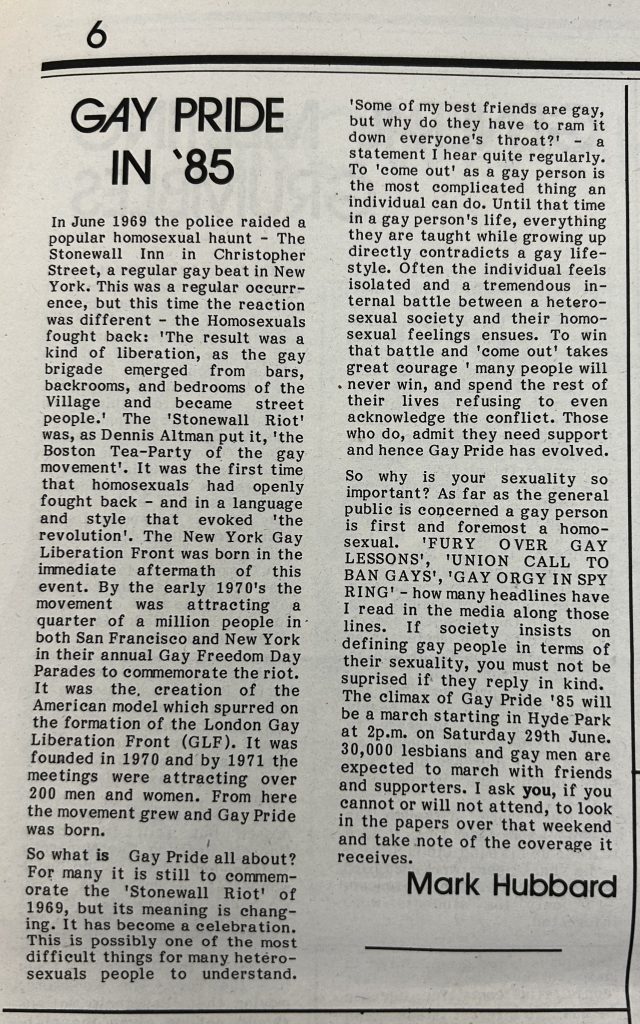
Figure 2: Mark Hubbard, ‘Gay Pride in ‘85’, Signature, Summer 1985, p. 6, Exeter University Special Collections, Exeter University/SIG, Signature 1983-85 (accessed 27th February 2024).’
A few years after the last issue of The South Westerner was published, its successor Signature debuted on campus in 1983. As the Thatcher years progress, the paper includes more features with members of GaySoc, as well as features around London Pride in 1985 (fig. 2), and growing awareness surrounding the ongoing HIV/AIDS epidemic, including a cover feature from December 1986, which, notably, preceded the government’s own public information campaign in 1987.
Section 28 and Exeposé
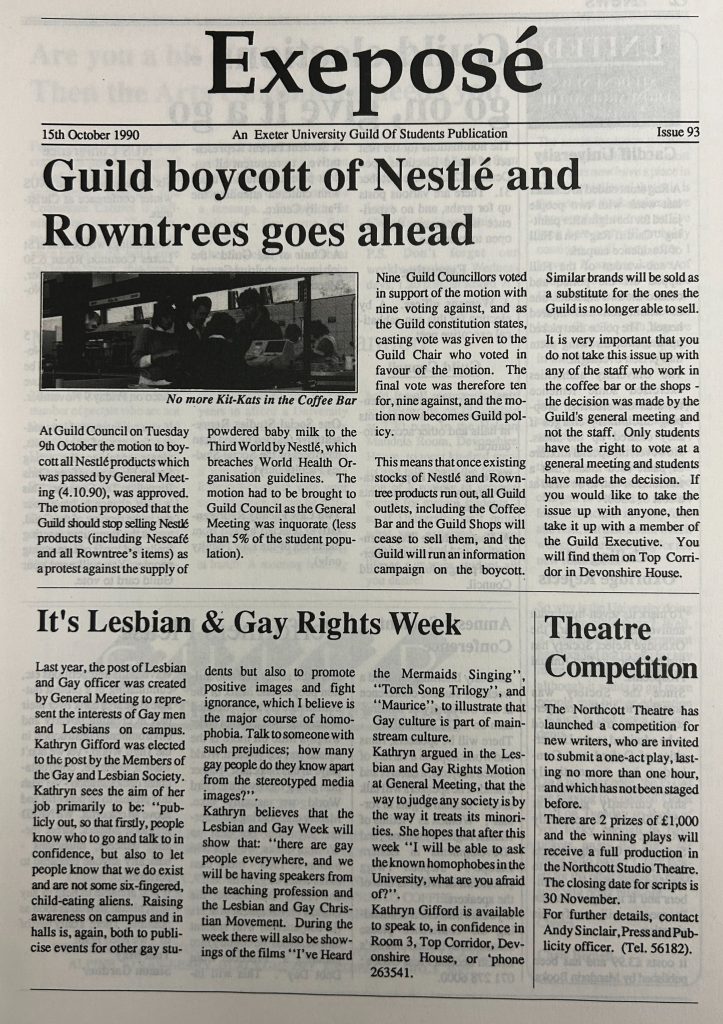
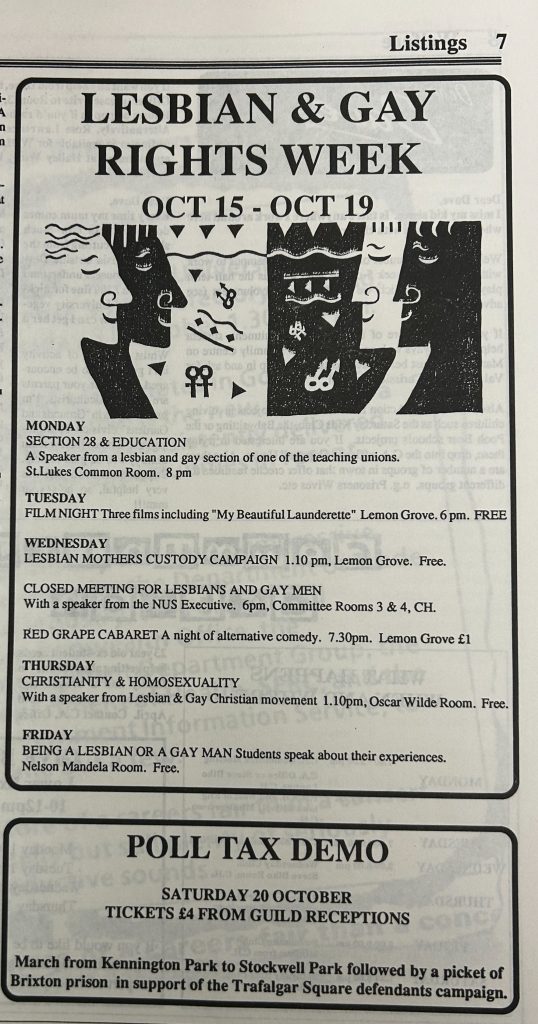
Following the passing of Section 28 in 1988, the early issues of the university’s current student publication, Exeposé, reveal a pivotal decade in which LGBTQ+ visibility grows even as it is being legislated against. GaySoc evolves into Lesbian, Gay and Bisexual Society, and the Guild comes to include both the elected position of Lesbian and Gay Rights Officer and an annual Lesbian and Gay Rights Week. For 1990’s Lesbian and Gay Rights Week, Exeposé listed the events planned by the Lesbian and Gay Officer as a cover feature. Alongside film screenings, the Week included a talk on Section 28 and education, highlighting the concern of students about the law and their university teaching (figs. 3 and 4). Notably, in figure 4, the placement of the week’s events also advertises a demonstration against the proposed Poll Tax of 1990, indicating the socio-political issues on the minds of Exeter’s students at this point.
Unknown, ‘Cover – It’s Lesbian and Gay Rights Week, Exeposé, 15th October 1990, p. 1, Exeter University Special Collections, Exeter University/EXEPOSE, Exeposé, 1990-1993 (accessed 19th March 2024).
Figure 4: Unknown, ‘Listings – Lesbian and Gay Rights Week’, Exeposé, 15th October 1990, p. 1, Exeter University Special Collections, Exeter University/EXEPOSE, Exeposé, 1990-1993 (accessed 19th March 2024).
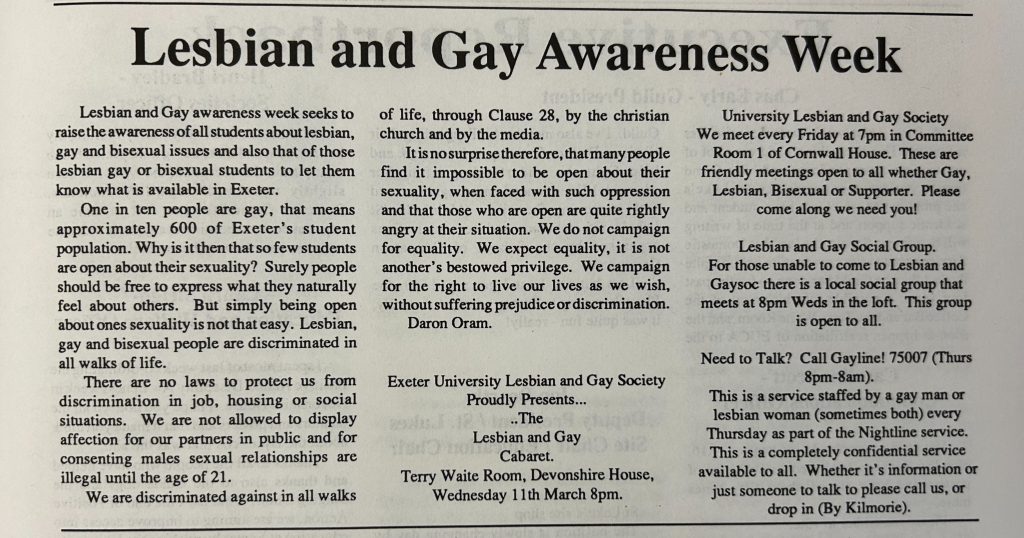
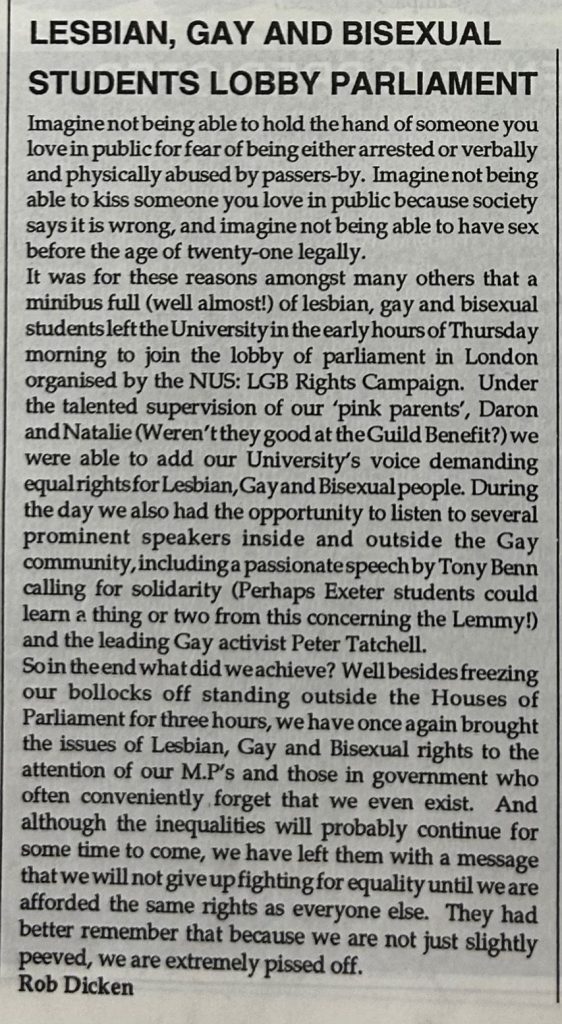
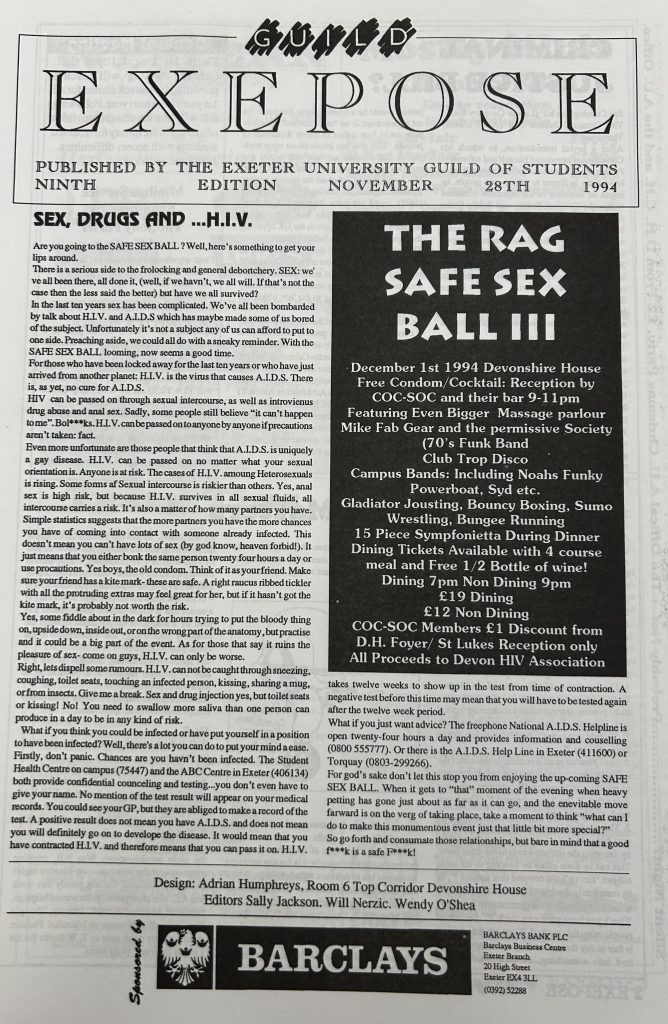
The following year’s Lesbian and Gay Rights Awareness Week was covered in Exeposé with an article outlining its significance in the context of the restrictions of Section 28 and its impact (fig. 5). Throughout the 1990s, several recurring names within articles ensured that the frustration and inequality brought about by Section 28 was not forgotten. In 1993, lesbian, gay and bisexual students lobbied Parliament in a protest that made front-page news on the subsequent issue of Exeposé (fig. 6) and joined a candle-lit vigil in London urging the government to reduce the age of consent for gay men. A specific weekly Nightline evening for queer students also sought to provide a local helpline for Exeter’s students. By this point, too, it appears that the Safe Sex Ball was an event held on 1st December, World AIDS Day, with proceeds going to local charities such as the Devon HIV Association (fig. 7).
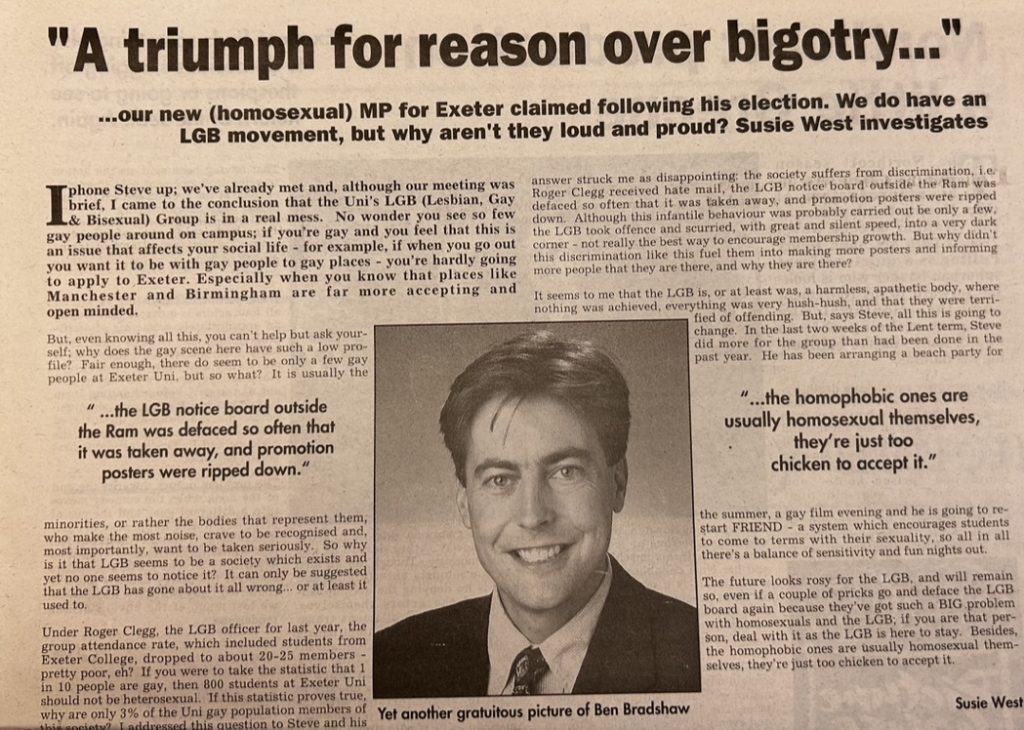
In the wider Exeter area, the 1997 General Election indicated a significant shift in attitudes evident in the articles published in student newspapers just a few decades prior. The election of the current Exeter Labour MP, Ben Bradshaw, was recorded as a victory over “bigotry”, and, as seen in figure 8, an Exeposé interview with Bradshaw offered a moment of reflection on the landscape of LGBTQ+ rights towards the end of the twentieth century.
Figure 5: Daron Oram, ‘Lesbian and Gay Awareness Week’, Exeposé, March 1991, n. pag., Exeter University Special Collections, Exeter University/EXEPOSE, Exeposé, 1990-1993 (accessed 20th March 2024).
Figure 6: Rob Dicken, ‘Lesbian, Gay and Bisexual Students Lobby Parliament’, Exeposé, 1st March 1993, p. 1, Exeter University Special Collections, Exeter University/EXEPOSE, Exeposé, 1990-1993 (accessed 20th March 2024).
Figure 7: Unknown, ‘Sex, Drugs, and HIV’, Exeposé, 28th November 1994, p. 1, Exeter University Special Collections, Exeter University/EXEPOSE, Exeposé 1994-1996 (accessed 25th March 2024).
Figure 8: Susie West, ‘A triumph for reason over bigotry’, Exeposé,12th May – 25th May 1997, p. 3, Exeter University Special Collections, Exeter University/EXEPOSE, Exeposé 1996-1998 (accessed 26th March 2024).
Only in 2003 was Section 28 fully repealed, with its ripples palpable long after its scrapping. The student publications held in the Special Collections on campus offer a vivid, important record of the effects of the changing landscape of LGBTQ+ lives and rights in the local area, and those at the university who were campaigning for equality, acceptance, and action within some of the darkest moments of recent national queer history. The papers allow us to see changes within the community as well, as GaySoc grew into the Lesbian, Gay, and Bisexual Society by the 1990s, and ultimately into the LGBTQ+ Society that is with us today.
By Chloë Edwards (pronouns: she/her/hers)
Doctoral Researcher (Art History & Visual Culture)
Postgraduate Teaching Associate
Research Culture Assistant, HASS PGR Gender & Sexuality Research Network
Faculty of Humanities, Arts and Social Sciences, University of Exeter
~~~~~~~~~~~~~~~~~~~~~~~~~~~~~~~~~~~~~~~~
The Section 28 and its afterlives project is co-led by Helen Birkett, Chris Sandal-Wilson, and Hannah Young in the Department of Archaeology and History at the University of Exeter. As well as supporting archival research into the South West’s LGBTQ+ history, the project team are conducting oral histories with LGBTQ+ people in the South West across 2024 with support from the National Lottery Heritage Fund. You can find out more about the project, including how to share your own stories of Section 28, here.
If you are interested in exploring LGBTQ+ history, you can find out more about resources in the University of Exeter’s Heritage Collections in the LGBTQ+ Research Resources guide.
This year marks the 30th anniversary of the opening of the Channel Tunnel and Special Collections is pleased to announce a new exhibition relating to investigations and studies in the 1950s-1960s for a channel crossing. The display case is located on Level 1 of the Forum Library, near the entrance from the staircase. This exhibition has been created by Special Collections staff with the assistance of student volunteer Vanessa Wong and features items from the papers of the civil engineer Sir Harold Harding, including reports, publications, articles and photographs. The exhibition is open to everyone and is expected to remain on display until summer 2024.
History of the Channel Tunnel
The tunnel, sometimes also referred to as the ‘Chunnel’ opened in May 1994, with the first freight train running in June and the first passenger service running in November 1994. It is the longest underwater rail tunnel in the world and is the only fixed link between the island of Great Britain and the European mainland.
A crossing between France and Great Britain was first proposed back in 1802. In the more than 150 years that followed, studies and plans for a crossing – including for a bridge, a railway tunnel, and combined rail and road tunnels – were regularly put forward, welcomed on both sides of the channel, but then abandoned due to disagreements.
In 1957, the Channel Tunnel Study Group was formed from English, French and American interest. Its purpose was to research the engineering and economic possibilities of a Channel Tunnel. The British civil engineer Sir Harold Harding was one of the key consultants to the Group. He and his French counterpart Rene Malcor led the investigations, which included boreholes on land, a geophysical survey, and pumping out and examining the experimental shaft at Sangatte in 1958, as well as an investigation of seabed conditions by Wimpey Central Laboratory in 1959. The Channel Tunnel Project was abandoned in 1975, but interest in a fixed cross channel link continued. The final deal was legally agreed in 1986, and the Channel Tunnel was officially opened in 1994.
Biography of Sir Harold Harding
Sir Harold John Boyer Harding was born in Wandsworth, London, on 06 January 1900. He qualified as a civil engineer and his early work concentrated on underground railway development in and around London, notably the reconstruction of Piccadilly Circus Station (1926-1929).
During the Second World War, he was responsible for defence works and emergency repairs to underground damage in London. From the late 1950s until 1978, he worked as a consultant and arbitrator, including to the Channel Tunnel Study Group (1958-1970), and he was a member of the Aberfan disaster tribunal (1966-1967).
Harding was an active fellow of the Institution of Civil Engineers, serving as president in 1963-1964. He was the founder chairman of the British Tunnelling Society (1971-1973). In 1981, his autobiography ‘Tunnelling History and my Own Involvement’ was published by Golder Associates. He died in Topsham, Devon, on 27 March 1986.
The Sir Harold Harding papers
The Sir Harold Harding papers are thought to have been originally donated to the University of Exeter’s Engineering department by Harding in c 1980, and they are now looked after by the University Library’s Special Collections. The collection of papers includes reports, documents, lantern slides, photographs, and prints relating to exploratory works mainly concerning the Channel Tunnel and Piccadilly Circus. The Sir Harold Harding papers are available for everyone to access – for research, enjoyment, or interest – in the Ronald Duncan (Special Collections) Reading Room in the Old Library. Find out more about visiting the Reading Room in our online guide.
For more information about the Sir Harold Harding papers, see our online archives catalogue at EUL MS 337 and EUL MS 337 add. 1.
To mark Agatha Christie’s 132nd birthday, we are pleased to announce a new exhibition in the Old Library! The exhibition is open to everyone and can be viewed by entering the Old Library on Streatham Campus via the main entrance and walking straight ahead through the barriers. The display cases will be situated to your left.
In this exhibition we delve into the archives to explore a range of responses to the character Poirot from individuals including Agatha Christie, Edmund Cork and Harold Ober (literary agents at Hughes Massie and Co. Ltd), publishers, film producers, and actors.
This exhibition features items from the University of Exeter Heritage Collections. On display are letters and documents from the business papers of Agatha Christie’s literary agents; books from our Special Collections; and items from the Bill Douglas Cinema Museum collections.
Agatha Mary Clarissa Mallowan (née Miller), the novelist known as Agatha Christie, was born in Torquay, Devon, on 15 September 1890. She became, and remains, the best-selling novelist of all time. She died on 12 January 1976 at her home in Winterbrook, Oxfordshire.
Hercule Poirot, the famous fictional Belgian detective with the egg-shaped head, made his debut in Agatha Christie’s first published novel, The Mysterious Affair at Styles in 1920. In total, he appeared in 33 novels, two plays, and more than 50 short stories. He made his final appearance in the novel Curtain, written in the early 1940s but not released until 1975, the last novel published by Agatha Christie before her death.
The exhibition is expected to remain on display until 06 March 2023.
Written by Chloe Cicely Chandler (MA English Literature)
In March of 2019 I somehow found myself within the British Library’s Manuscripts Reading Room with my eyes delighting over the sprawling handwriting within Coleridge’s notebooks. Ever an inspirer of wonder in me, it was magical to see his mind come alive; the thoughts seeming to burst onto the page with frantic imagination. I was especially fixated by Coleridge’s sketches of the Lake District that recorded the walks he had adventured on with his fellow Romantic visionaries: William and Dorothy Wordsworth. I often reflect on the fact that I touched the paper upon which Coleridge had scribed over 200 years ago. Now, it seems as if it were a distant, hazy dream. This was the first ever encounter I had with physical archival research, and one I would never forget. The research was undertaken during my English undergraduate degree for my third-year dissertation on altered states of consciousness in Romantic literature. In addition to Coleridge, I also focused on the writings of Sir Humphry Davy and Thomas De Quincey. This led me to take a separate journey where I also travelled to the Morrab Library in Penzance to learn more about Davy’s poetical and chemical experimentations from the archives in his Cornish hometown.
Both of these experiences were incredibly rewarding and put into perspective what I most enjoyed about studying English literature: that ability to peer into history through the words that individuals have left behind; as if the gap in time between the past and the present has been momentarily suspended. Such opportunities for research were the highlight of my entire degree – they made me feel more connected to the research I was conducting, and encouraged me throughout the difficult process of writing and editing my dissertation – providing my work with a greater sense of purpose.
Out of these explorations, I became very interested in the ways in which I could make the most of being an English MA student at a research-focused university and partake in opportunities to delve into the archives. This academic year, I joined as one of the Library Champions for English. As part of this role, I act as a liaison between library staff and students, passing along feedback, suggestions, and making book requests on behalf of students within my subject area. I had the opportunity to develop a project of my choosing relating to library services. Consequently, I decided it would be valuable to concentrate my project on the Special Collections based at the University of Exeter. Specifically, I wanted to consider the ways in which students could be made more aware of the unique primary resources available to them in order to increase their engagement with the archives during their degree.
Surveying Student Feedback
It was important for me to first gather insight from my fellow peers, so I put together a survey that was open to students from across the disciplines. This survey aimed to get a sense of general student knowledge of the archival services that the university offers, whilst also offering a space to make suggestions for how the Special Collections could be more integrated into the student experience. Although the responses ended up being mainly from Humanities students – with a majority from English undergraduates – their experiential highlights and suggestions were immensely helpful in terms of evaluating the current dialogue between students and the Special Collections.
Of those who had used the archives, their memories were very positive. One student relayed their enthusiasm as such: “I have only accessed the archives as part of a workshop on accessing them and it was really interesting! [The] Staff [were] great and very informative, I will definitely be in touch if there is something I need to access.” Speaking of the online catalogue, a student mentioned how valuable it was for their research: “I loved it, I accessed it almost daily to complete my assignments.” Others recall their use of the archives as: “[an] Intriguing and … exciting experience”; additionally: “I found the archivist very helpful and friendly and enjoyed the experience.”
The main areas that could improve student engagement with the Special Collections, as suggested by those surveyed, related to the following:
– Accessibility: student responses highlighted how the process can appear daunting, whilst other students were less aware of where to begin researching.
– Visibility: students highlighted a need to increase overall awareness of the collections through visual displays and marketing throughout the university. As a fellow student expressed: “I’d love for more people to handle and see these manuscripts.”
Following this initial feedback collection from my student cohort, I wanted to get a more informed perspective of the process behind performing archival research: this required me to find archival works of interest from the catalogue and then arrange a viewing of them.
The Process
As a starting place, the Collection Highlights page is especially helpful as it presents intriguing items within the university’s collection which you can then search for on the Archives catalogue, or use as a springboard for other research ideas. My personal interests for my MA dissertation relate to Romantic and Gothic literature of the eighteenth and nineteenth centuries. I am also interested in kindred areas such as the supernatural and folkloric. From our discussions, the Special Collections team gave me some fantastic suggestions to consider based on these research topics.
Of particular interest to me was the Theo Brown Collection that comes with its own helpful collection guide. Brown was a renowned folklore researcher and Research Fellow within the Philosophy and History Departments at the University of Exeter. Her immense research collection has been in the university’s archive since her death in 1993. Brown had a particular focus on folklore rooted in the South West of England, and, as an individual born and raised here, this sparked my interest. From within the vast collection, I needed to specify particular items, each of which is given a name relating to the overarching topics they contain. I finally decided upon the boxes that covered ‘Fringe Lore and UFOs’, ‘Guising and Hobby Horse’, and ‘Devon and West Country witches and witchcraft’. In addition, there was a fascinating object under the Rare books and maps section that I felt compelled to see as a Gothic researcher: a 1st issue, 1st edition of Bram Stoker’s legendary Gothic novel Dracula from 1897 housed within the Lloyd Collection. This edition is renowned for its strikingly coloured cover. As one of my favourite literary works, I was delighted to hear that the university had such an item available for viewing.
When I went about making my request via the Visiting Heritage Collections webpage, I first had to find the necessary codes for the Collections, which you can search for on the archive database: archival works have a title and MS number; books have a title and call number; journals have a title and volume/issue number. After making my request, I received an email promptly confirming my reading room booking. Before attending my booking, I read up on the handling procedures laid out in the Special Collections handling guide which provided some really useful information about how different types of materials are to be treated. This was practically helpful when I was searching through Brown’s archive as it included an array of different materials, including many pictures, for which I needed gloves. One interesting piece of information which often surprises people is that, in most cases, when handling rare books, it is preferable for you to not wear gloves as this decreases your physical sensitivity to the material itself, making it more likely that you might damage it.
When I arrived at the Old Library on the day, I went over to the Special Collections desk to inform of my arrival. My selected items had already been prepared behind the desk for viewing and were promptly brought out. The items displayed within the Ronald Duncan Reading Room itself were instantly engaging. To one side was a writing desk that had belonged to the much-beloved author Daphne Du Maurier, which came as a wonderful surprise as I was able to sit near it whilst I researched. I had seen one of her writing desks only once before at the Jamaica Inn’s Smugglers Museum on Bodmin Moor. I was also particularly fond of the artworks on the back wall by the artist Leonard Baskin which depicted various birds, including a variety of crows – a favourite Gothic symbol of mine!
I first went about exploring Brown’s items: from memory, a news story she had collected that was immensely intriguing was about a so-called ‘witch bottle’ that had been discovered in a basement. The bottle, under examination, turned out to be filled with a concoction of items that suggested its use in a baneful, magical working, containing nails, human urine, and thorns, amongst other items. Although I had only engaged with a small part of the entire Theo Brown collection, I was amazed by how much was contained within each box and managed to spend the entire afternoon slot searching through an amalgam of pictures, newspaper clippings, and letters – how the time flew by! In light of this, I would suggest to potential Special Collection users to allow themselves ample time to view resources and not try to cram too much into one visit. Rather, take the time to enjoy researching and making notes. And, if needed, return for another visit.
Following this, I handled the 1st edition of Dracula, for which I was given a book snake weight and cushion to use, so that the spine and fragile pages would be supported. I was instantly amazed by the vivid yellow cover that adorned the book. The cover was made even more pronounced by the red lettering that spelt out the book’s title, as if written in blood; very befitting given the contents. There was something strangely modern about the book’s palette of colours that made it feel out of place for the time period in which it was written. The aesthetic choices made about the design seemed to highlight the very alluring nature of the work, presenting the book itself as a kind of fantastical object. I feel incredibly lucky to have been given the opportunity to handle these items from the Special Collection and shall remember the experience fondly.
Call For Archival Research
In recent years, I have found that research of both primary and secondary sources for assignments tends to be confined to online databases. And, although this is undeniably helpful in terms of providing greater access to works from other institutions and aiding in the search for specific terms, I find there is something inherently missing from this experience of research. When you are there in person, there is a certain magic and fascination that can be kindled, which is more difficult to attain through a digitised source. It puts you back in touch with the physical history of these sources – the feel and sensation of them – such things are often lost when searching purely within digitised collections. Whilst at university, we have the unique chance to use these resources which might otherwise be unavailable or more difficult to access were we not students.
I highly recommend my fellow students give the archives a go! You may not have a particular text or subject in mind for your research, which is completely fine; using the archives is actually a fantastic way to discover an area you might be interested in. It also incentivises you to produce more distinctly original research to present to your subject area. The archivists, with their expertise in the collection items, are also on hand to provide helpful suggestions, as they did in my case.
Future Prospects
In response to student feedback, the Special Collections team have been putting these suggestions into practice, such as, updating the website pages to make them more accessible and user-friendly. We are also planning some further collaborative projects to improve accessibility and visibility over the next academic year – so make sure to watch this space!
We were delighted to be joined last week by Year 12 student Alice Dunn for a week of work experience in Special Collections. Below Alice shares some of her impressions and reflections on her experience. We would like to take this opportunity to thank Alice for her excellent work and wish her every success for the future.
My name is Alice Dunn, and I have spent a week in a work experience placement with the special collections and archives department of the University of Exeter. I am a year 12 student at King Edward VI Community College in Totnes, and very luckily for me the special collections team have been kind enough to facilitate my fascination with literature and history, and by extension with the vast collections kept here!
Map of Devon from an atlas of the counties of England and Wales [Rare books B 1590/SAX/XX]
My placement began on Monday with an introduction to the collections and the work done regarding them, including their preservation and conservation. I measured the temperature and humidity in each of the rooms archives were stored in, and recorded these daily observations to ensure these conditions were optimum; extremes of either temperature or humidity can damage the items. What was particularly exciting was learning to handle the materials – there were a number of different items with which I was able to practice, including a 1579 hand-coloured Atlas of the counties of England, produced by Christopher Saxton! I learned that the best way to handle these materials is not, in fact, with gloves (with the exception of photographs), as their role in reducing dexterity increases the risk of tearing pages, but instead with clean hands. This direct contact with history was unlike anything I had ever experienced before; while I have learned about these time periods in history, or read new editions of texts, to handle materials which are hundreds of years old brings a sense of connection with the past that I do not think I could have otherwise felt. Down to the very knowledge that the ink on that page was handwritten by someone who experienced the things I have learned about from books, or to read the annotation of readers, like me, who annotated books they read, but in the 16th century (not like me!), my experience with archival materials has allowed a cohesion of my knowledge, ensuring enrichment in my future learning. While looking around the collections, I was also fortunate enough to be shown materials such as a sheet from a 1478 Caxton print of Chaucer’s ‘The Canterbury Tales’, and Golding’s handwritten manuscript of the first draft of The Lord of the Flies, (though, due to its fragility, handling is avoided), both of which resulted in vast amounts of excitement on my part!
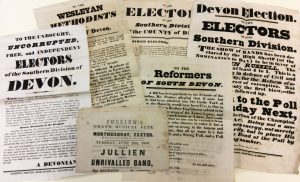
Bills relating to elections in Devon, 1835, and to a concert in Exeter, 1858 [EUL MS 269]
Over the next few days, I was given a few projects to work on. On Tuesday, I sorted through letters to, from, and regarding, Agatha Christie, (some of which were handwritten by Christie herself!), selecting those that were relating to Poirot for an exhibition to go alongside a talk on him. After this experience I feel I am justified in stopping anyone from criticising my handwriting again, or else admitting that Christie, despite her literary genius, may not have been popular among teachers or A-Level examiners! I also looked at a collection of political bills from 1835 and researched the context behind these to aid the writing of a social media post about them, and the information I learned from this seems since to appear in my day-to-day life with astonishing frequency (namely in Middlemarch, which is active in its discussion of 19th century politics!). Throughout the week, I also accompanied team members in receiving and unpacking new materials that had arrived in the post, learning about the process of ‘accession’ before cataloging, and how to write titles and descriptions for these so that they can be best found by researchers. As part of this, I studied a recently received item which has not yet been cataloged, creating resources like a map on which all the places mentioned are flagged, as well as using university records to find out more about the individuals mentioned. This will ensure the item is better understood, so that when it comes to cataloging it can be organised in the collection more easily, and so that its description will be as accurate as possible, making it more accessible to researchers.
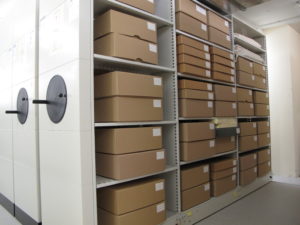
Archives in the strongroom
In aiding retrievals to accommodate researchers’ requests, and reshelving after the resources have been used, I also came to learn about the organisation of the archives themselves. The breadth of the collections means the system in place is integral to ensuring they can be fully utilised by others, and thus learning about the system of cataloging here, and the differing one in the Bill Douglas Cinema Museum where I was fortunate enough to be able to get a tour and speak to staff, has given me a much deeper understanding of the day-to-day process of keeping archives.
On Thursday, the staff at special collections had arranged for me to visit the closely interlinked Digital Humanities Lab at the University. I was given a tour of the building, and was fascinated to learn the role technology can have in the study of humanities, both in relation to archival materials and not. Due to the fragility of many of the items, including wax figurines and skulls, many objects will have 3D printed copies made to enable hands-on interaction. The intersection between archives and photography was something I had never thought about, but constitutes much of the work done by the Digital Humanities Lab – they have two purpose-built photographic studios, enabling photos to be taken in such high-quality, flakes of paint can be seen on the surfaces of pages. The Exeter Book (a book of Old English riddles from the 10th century, some of the oldest surviving pieces of English literature today) is owned by Exeter Cathedral, and while it is not linked to the university nor their collections, it was recently photographed and digitised by staff at the Digital Humanities Lab using their specialist photographic equipment. Having attended seminars and lectures with universities on the poems and riddles in this book, the accessibility created by technology is of importance to me, and thus it was fascinating to discover the work that is done to aid this.
While I was initially most attracted to this work experience placement from more of a researcher perspective – I’m always fascinated by materials which can tell me more about my areas of interest – it has resulted in a better understanding of what it means to be an archivist, and, as a consequence, an interest in the role for its own sake; whether or not the collections I have looked at in my placement have been relevant to what I want to study in the future, they are intriguing in themselves, and not because they relate to what I already have knowledge of. I have had the most enjoyable week learning new skills and information – I don’t think I could’ve found another placement that so well supported my interests, while expanding my knowledge of everything! A big thank you to the Special Collections and Archives team for being so accommodating!
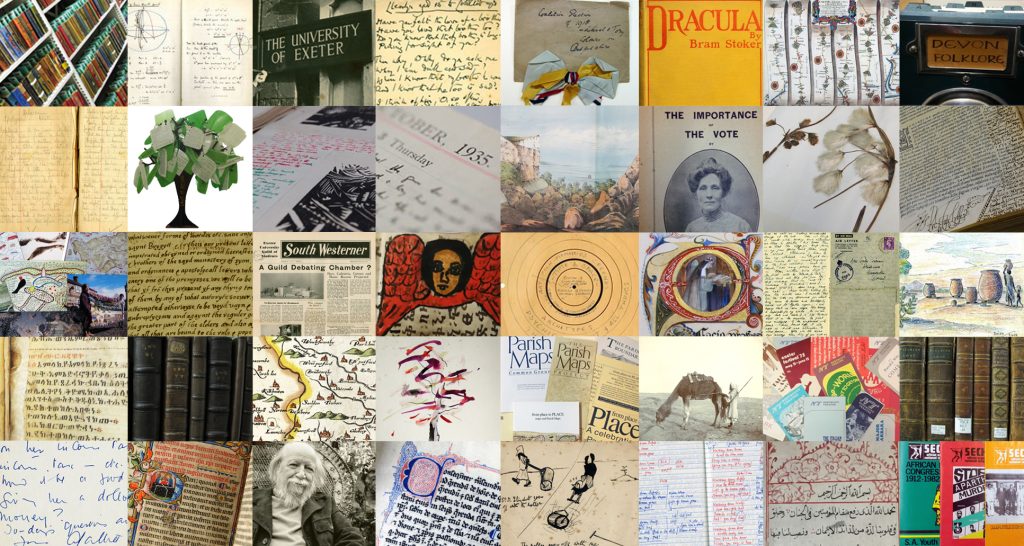
Collage of images from the University of Exeter Special Collections
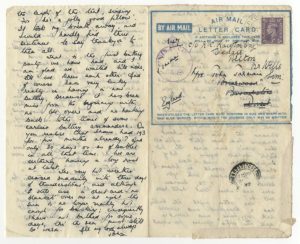
The University of Exeter Special Collections is pleased to announce that a full transcript of the wartime letters of John Jarmain (EUL MS 413) to his wife, Beryl Jarmain, is now available to browse on our online Digital Collections platform. This transcript will enable enhanced access, including full-text search, to this collection of unique and deeply personal letters.
We would like to take this opportunity to express our thanks to our student interns, Ruby and Beth, who transcribed the letters; and to Janet Coward, the daughter of John Jarmain, for kindly granting permission for the transcriptions. We are committed to providing access to our collections in many different ways, and hope this new resource will faciliate discovery, use and enjoyment of this archival collection.
The transcript is free to access by everyone here on our Digital Collections platform.
By continuing to use this website you consent to the use of cookies and your personal data as set out in our privacy policy. Close
Privacy & Cookies Policy
Privacy Overview
This website uses cookies to improve your experience while you navigate through the website. Out of these cookies, the cookies that are categorized as necessary are stored on your browser as they are as essential for the working of basic functionalities of the website. We also use third-party cookies that help us analyze and understand how you use this website. These cookies will be stored in your browser only with your consent. You also have the option to opt-out of these cookies. But opting out of some of these cookies may have an effect on your browsing experience.
Necessary cookies are absolutely essential for the website to function properly. This category only includes cookies that ensures basic functionalities and security features of the website. These cookies do not store any personal information.